In the rapidly developing industrial landscape of the Philippines, the demand for precision, speed, and quality in manufacturing and construction has never been higher. As the backbone of infrastructure projects and local industries, steel fabrication in the Philippines is a sector constantly seeking innovation. The old ways of cutting and shaping metal—using manual saws, plasma torches, or mechanical shears—are being replaced by a technology that promises a new level of accuracy and efficiency: fiber laser cutting.
If you have heard the term but are not sure what it means, this guide is for you. We will break down the essentials of this innovative technology, explain how it works, and reveal why it is becoming the gold standard for metal cutting in the country.
What is Fiber Laser Cutting? A Simple Definition
At its core, fiber laser cutting is a thermal cutting process that uses a focused, high-power laser beam to melt, burn, or vaporize material in a localized area. Unlike traditional cutting methods that rely on physical force, fiber laser cutting achieves a clean, precise cut using intense heat. The “fiber” in the name refers to the solid-state medium—a special optical fiber—that generates and guides the laser beam.
This technology represents a significant leap forward from older methods. For instance, while plasma cutting uses a high-velocity jet of ionized gas to cut through electrically conductive materials, a fiber laser cutter offers a much finer kerf (the width of the cut) and a smoother edge finish. This eliminates the need for extensive post-processing, saving time and money. It is a notable change for anyone involved in intricate metalwork or high-volume production.
How Fiber Laser Cutting Works: From Light to Precision Cut
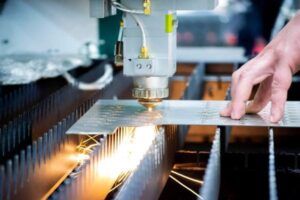
The magic behind fiber laser technology is a fascinating journey of light and power. The process can be broken down into three key stages:
1. Generating the Laser Beam
The journey begins inside the fiber laser cutting machine itself. A series of pump diodes or special light sources generates a low-power laser beam. The light is transmitted into a specially engineered optical fiber that has been infused with rare-earth elements such as ytterbium. As the light travels through this fiber, the rare-earth elements absorb the energy and then emit it at a much higher, more focused power. This process, known as stimulated emission, creates an incredibly intense and coherent beam of light.
2. Beam Delivery and Focusing
Once generated, the high-power laser beam is not sent through a series of mirrors, as in older CO2 laser systems. Instead, the light moves smoothly through the optical fiber until it reaches the cutting head. This direct, enclosed delivery system is a major advantage, as it minimizes power loss and prevents contamination.
At the cutting head, the beam passes through a lens that focuses the light onto a pinpoint-small spot, sometimes as narrow as a hundredth of a millimeter. This high concentration of energy enables the laser to melt and vaporize even very thick materials.
3. The Cutting Process
With the laser beam focused, the cutting head is precisely guided over the material’s surface by a computer numerical control (CNC) system. The intense energy of the beam melts the material, and a high-pressure assist gas—like oxygen for mild steel or nitrogen for stainless steel—is simultaneously blown through the cutting head. This gas serves two purposes: it blows the molten material away from the cut, creating a clean, dross-free edge, and it helps cool the surrounding area to prevent warping.
This seamless integration of laser, gas, and motion control is what makes a modern laser metal cutting machine an unparalleled tool for precision work, from crafting custom parts for vehicles to fabricating structural components for buildings.
Advantages of Fiber Laser Cutting in Philippine Industries
The adoption of fiber laser technology is not just about keeping up with global trends; it is about gaining a competitive edge. Here is why this technology is a perfect fit for the demands of the Philippine market:
Unmatched Precision and Quality
Fiber lasers can cut complex geometries and intricate patterns with astonishing accuracy, often with a tolerance of just a few micrometers. This precision is vital for industries like electronics, medical device manufacturing, and architectural design, where every detail matters. The smooth, clean cuts also drastically reduce the need for deburring and finishing, ensuring a superior final product.
Speed and Efficiency
Compared to traditional plasma or oxy-fuel cutting, a fiber laser cutter operates at significantly higher speeds, especially on thin to medium-thick materials. This means faster turnaround times for clients, allowing local businesses to take on more projects and meet tight deadlines.
Versatility Across Materials
A single fiber laser cutting machine can manage a wide range of materials and thicknesses. It is highly effective on common metals like:
- Stainless steel
- Mild steel (carbon steel)
- Aluminum
- Copper
- Brass
This versatility makes it an asset for job shops that manage diverse client requests, from industrial parts to artistic metalwork.
Cost-Effectiveness and Sustainability
Although a fiber laser cutting machine requires a large upfront cost, it delivers considerable savings over time. The technology boasts high energy efficiency and minimal maintenance requirements. Additionally, the narrow kerf and minimal heat-affected zone led to less material waste, which is a major benefit in a country where resources are highly valued.
Choosing a Fiber Laser Cutting Partner in the Philippines
The rise of fiber laser technology in the Philippines marks a new era for steel fabrication in the Philippines. It’s no longer a question of if you should use advanced cutting methods, but who you should partner with.
When you are searching for tube laser cutting services near me or a reliable steel fabricator, look for a partner that has embraced this technology. A company that invests in a fiber laser cutter demonstrates a commitment to quality, efficiency, and customer satisfaction. The precision and speed of fiber laser technology are non-negotiable for projects that demand the highest standards.
For a partner that combines innovative technology with extensive industry experience, we encourage you to explore the capabilities of He-Max Industrial Corporation. As a leader in the Philippine steel fabrication industry, we utilize state-of-the-art fiber laser technology to deliver unparalleled quality and precision for your projects. Visit our website to learn how we can help you bring your vision to life.
Whether you are a contractor, architect, or business owner in need of custom metal parts, understanding what fiber laser cutting is will help you make a more informed decision. Choose a partner that can provide the speed, quality, and precision that your projects deserve.
For more information or inquiries, feel free to contact us at:
- Trunkline: (632) 8275-3888
- Customer service hotline: 0917-1158387
- Email: hemaxsales@gmail.com