The landscape of Philippine manufacturing has evolved rapidly over the last few years. As we move through 2026, the demand for precision, speed, and cost-efficiency has made fiber laser metal cutting the gold standard for sheet metal fabrication. Whether you are in construction, aerospace, or interior design, understanding the capabilities of this technology is crucial for project success.
At He-Max Industrial, we provide world-class laser cutting services in Manila, helping local businesses transform raw metal into high-precision components. But a common question persists among engineers and procurement officers: What exactly can these machines handle? In this guide, we will break down the specific metals compatible with fiber laser technology—including stainless steel, mild steel, aluminum, and brass—and explore why this method has become the preferred choice for modern industry.
What Metals Are Compatible with Fiber Laser Cutting?
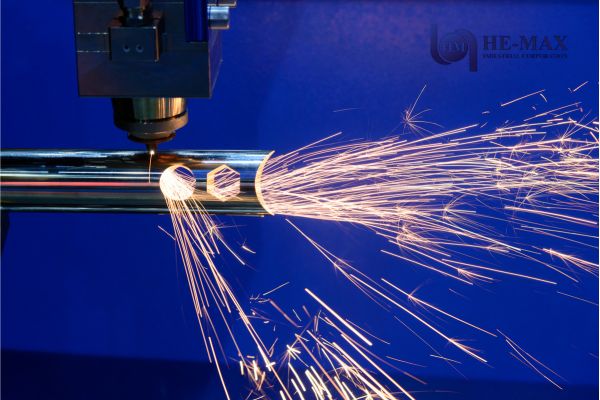
If you are wondering, “What metals are compatible with fiber laser cutting?” the short answer is: almost all common industrial alloys. Unlike older CO2 lasers that struggle with reflective surfaces, modern fiber lasers utilize a shorter wavelength that is more readily absorbed by metal.
Specifically, fiber lasers are exceptionally efficient at processing:
- Stainless Steel (various grades like 304 and 316)
- Mild Steel / Carbon Steel
- Aluminum
- Brass and Copper
Why Choose Fiber Laser Technology?
The shift toward fiber technology isn’t just a trend; it’s a response to the need for higher throughput. The primary advantages include:
- High Precision: Achieve tolerances as tight as ±0.1mm.
- Clean Edges: Minimal dross or burrs, often eliminating the need for secondary finishing.
- Fast Cutting Speed: Particularly on thin to medium-gauge sheets.
- Lower Distortion: The concentrated heat-affected zone (HAZ) prevents warping.
- Repeatability: Ideal for bulk production where every part must be identical.
Stainless Steel: Clean, Precise, High-Quality Cuts
One of the most frequent queries we receive is: “Can fiber lasers cut stainless steel effectively?” The answer is a resounding yes. In fact, stainless steel laser cutting is perhaps the most common application for fiber lasers in the Manila market today.
Common Applications
The versatility of stainless steel makes it a staple in various sectors. You will find laser-cut stainless steel in:
- Kitchen & Food Processing: Sinks, industrial ovens, and prep tables.
- Architectural Components: Decorative facades, handrails, and signage.
- Medical Equipment: Surgical tools and specialized enclosures where precision is non-negotiable.
Mild Steel: Fast Cutting Speeds and High Efficiency
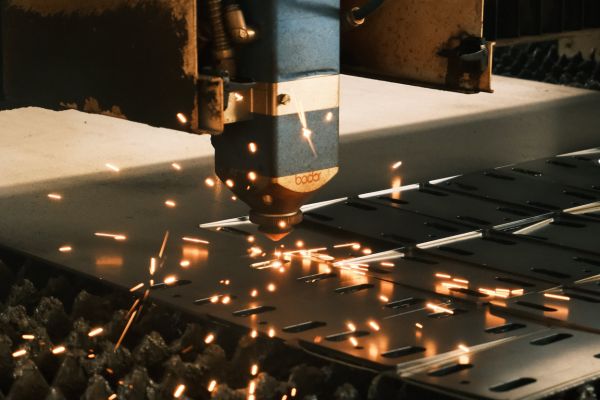
Mild steel is the backbone of the construction and automotive industries. When it comes to sheet metal laser cutting, mild steel offers the most “bang for your buck” in terms of speed and thickness.
Industrial Uses
Because it is cost-effective, laser-cut mild steel is used for:
- Industrial Brackets and Plates
- Automotive Chassis Components
- Heavy Machinery Frames
Aluminum: Lightweight but Reflective
For a long time, aluminum was considered “tricky” for lasers because it is highly reflective and a great conductor of heat. However, the question “Is aluminum suitable for fiber laser cutting?” now has a definitive “Yes.”
Fiber lasers bypass the reflection issues that used to plague CO2 systems. Aluminum laser cutting is now a standard service for industries requiring lightweight, corrosion-resistant parts.
Challenges and Solutions
- Thickness: Generally ranges from 1 mm to 12 mm.
- The Heat Factor: Because aluminum dissipates heat so quickly, the laser must move fast to prevent “melting” rather than “cutting.” Modern fiber systems use high-frequency pulsing to achieve smooth edges with minimal burrs.
- Applications: Signage, electronic housings, vehicle panels, and aerospace components.
Brass: High Precision for Decorative and Mechanical Parts
Brass and copper are “yellow metals” known for their high thermal conductivity and reflectivity. You might ask, “Can fiber lasers cut brass?”
In 2026, the answer is yes. Advanced laser metal cutting machines are now equipped with “back-reflection” protection. This allows the laser to cut through brass safely without the reflected light damaging the machine’s sensitive optical components.
Uses:
- Luxury Interior Design: Custom room dividers and furniture inlays.
- Electrical Components: Busbars and connectors.
- Awards: High-end plaques and medallions.
How He-Max Industrial Supports Your Metal Requirements
Choosing the right material is only half the battle; choosing the right partner is what ensures your project is delivered on time and within budget.
Our facility is equipped with advanced fiber laser machines designed to handle high-volume production and complex custom prototypes. We specialize in:
- Precision Cutting: We handle stainless steel, mild steel, aluminum, and brass with identical attention to detail.
- Customization: From CAD design to the finished product, we cater to unique architectural and engineering requests.
- Efficiency: We understand the “just-in-time” requirements of modern business, offering fast processing and reliable delivery throughout Metro Manila and beyond.
- Expertise: Our technical staff are trained to optimize machine settings for every specific alloy, ensuring you get the best edge quality possible.
For more technical insights, you can check our guide on material selection or view our portfolio of recent projects.
Get precise, professional results with He-Max Industrial’s laser cutting services in Manila. Whether you need custom fabrication or bulk production cutting, our team is ready to help you bring your designs to life.