Whether for high-rise basements, port expansions, or industrial site development, retaining wall systems are critical to ensuring soil stability and preventing collapse. These structures play a vital role in managing earth pressure, especially during deep excavations and waterfront construction.
In the Philippines, two of the most widely used systems are steel sheet piles and concrete retaining walls. Both serve the same purpose — soil retention and excavation support — but differ in material composition, installation process, and long-term performance.
Choosing between the two often depends on project scope, site conditions, and cost considerations. With the help of an experienced sheet pile supplier in the Philippines, contractors and engineers can determine which solution offers the best balance of strength, flexibility, and sustainability.
Sheet Piles and Concrete Retaining Walls Explained
Before comparing the two, it’s important to understand their basic differences and applications.
What Are Steel Sheet Piles?
Steel sheet piles are long, interlocking sections of rolled steel that form a continuous wall when driven into the ground. Their primary purpose is to retain soil or water during excavation or to provide long-term structural support.
They’re often used in:
- Excavation support systems in urban construction.
- Waterfront projects like wharves, seawalls, and flood barriers.
- Basement wall construction for commercial or mixed-use buildings.
What Are Concrete Retaining Walls?
Concrete retaining walls, on the other hand, are rigid structures built from reinforced concrete, typically cast in place or constructed using precast panels. They resist lateral earth pressure through their weight and design geometry.
Common applications include:
- Perimeter retaining walls for properties or subdivisions.
- Basement walls and foundations.
- Landscaping and slope protection.
While both systems can perform well under the right conditions, their installation method and adaptability differ significantly — making each better suited for specific environments.
Advantages of Steel Sheet Piles
Steel sheet piles have become increasingly popular in Philippine structural retaining systems, especially in congested city sites and industrial zones.
- Quick Installation and Minimal Excavation Footprint
Unlike concrete walls, which require formwork, curing, and backfilling, sheet piles can be installed immediately using vibratory or impact hammers. This results in faster project turnaround and minimal disruption to surrounding structures. - Reusability and Flexibility
Sheet piles can be driven, extracted, and reused, making them ideal for temporary works such as cofferdams or excavation enclosures. Their modular nature also allows for easy extension or modification of wall depth. - Ideal for Constrained Urban Sites
In tight project spaces — like basements in Makati or Pasig — sheet piles minimize excavation width while still providing full structural integrity. This makes them ideal for projects requiring deep excavation support in the Philippines without encroaching on adjacent properties. - Long Service Life with Proper Coating
When coated with corrosion-resistant materials such as epoxy, polyurethane, or hot-dip galvanization, steel sheet piles in the Philippines can last for decades, even in marine or high-moisture environments.
Advantages of Concrete Retaining Walls
Concrete retaining walls remain a standard solution for permanent, heavy-duty applications where durability and rigidity are the priority.
- Long-Term Structural Strength
Once properly designed and built, concrete walls can support significant loads and withstand environmental stress for many years with minimal maintenance. - Low Maintenance in Stable Soil Conditions
In non-corrosive environments — such as inland areas or dry terrains — concrete performs exceptionally well and requires little to no upkeep. - Suitable for Aesthetic and Permanent Features
Because of their customizable formwork, concrete walls can also serve as architectural elements in landscaping or property boundaries, offering both function and visual appeal. - Ideal for Basements and Property Boundaries
In basement wall construction, concrete walls integrate easily with foundation systems. They’re also preferred for perimeter retaining walls and slope protection in residential and commercial developments.
Comparative Analysis: Steel Sheet Piles vs. Concrete Retaining Walls
Below is a side-by-side comparison of key performance factors:
| Factor | Steel Sheet Piles | Concrete Retaining Walls |
| Installation Speed | Fast — no curing required | Slower — requires formwork and curing |
| Site Space Requirement | Minimal; ideal for tight sites | Needs more excavation and space |
| Reusability | Can be extracted and reused | Permanent; non-reusable |
| Durability (Properly Coated) | Excellent in marine and wet soil | Excellent in dry, stable soil |
| Cost Efficiency | Cost-effective for temporary or repeat projects | Cost-effective for permanent, long-term structures |
In essence, steel sheet piles excel in speed, flexibility, and reusability, while concrete retaining walls dominate in permanence and load-bearing capacity.
When to Use Each System
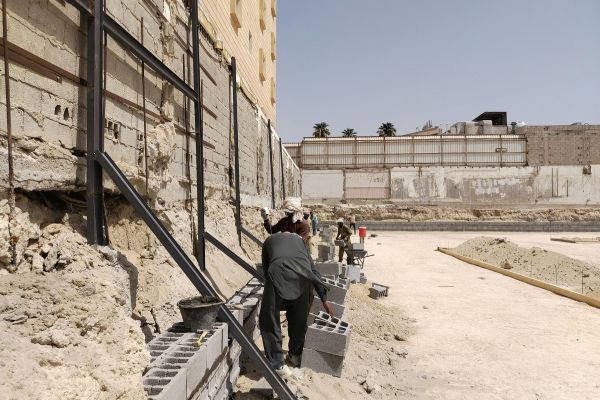
The right retaining wall system depends on the project’s purpose, soil conditions, and budget.
Use Steel Sheet Piles When:
- The project requires temporary or reusable support, such as cofferdams or excavations.
- You’re working in tight, urban spaces with limited access.
- The site involves deep excavation or water exposure (e.g., riverside or coastal projects).
- Speed of installation is a priority.
Use Concrete Retaining Walls When:
- The wall serves as a permanent property boundary or basement wall.
- The area has stable, dry soil conditions with minimal corrosion risk.
- The design integrates with landscaping or architectural finishes.
In practice, some developments even use hybrid systems — steel sheet piles for the excavation phase, followed by a cast-in-place concrete wall for the permanent structure.
For related resources, explore our guides on: Common Tubular Steel Sizes
Choosing the Right Sheet Pile Supplier in the Philippines
Finding a trusted partner can make or break the success of your retaining wall system. Here’s what to look for in a sheet pile supplier in the Philippines:
- Quality Steel Grades and Coating Options
Ensure your supplier provides certified steel grades that meet international standards and offers protective coatings suited to local soil and weather conditions. - Delivery and Inventory Capability
Large projects need consistent material availability. A supplier with strong logistics and stock capacity prevents costly site delays. - Engineering and Technical Support
Choose a supplier that understands excavation support in the Philippines — one that can assist with sizing, design compatibility, and installation recommendations. - Proven Industry Experience
Suppliers like He-Max Industrial Corporation have established credibility in providing steel sheet piles in the Philippines, structural steel materials, and fabrication solutions for commercial and industrial projects nationwide. Their commitment to precision and reliability ensures every client receives quality materials backed by technical expertise.
We offer top-quality materials, expert advice, and on-time delivery — helping your project stand strong from foundation to finish. To learn more or request a quotation contact us at:
- Trunkline: (632) 8275-3888
- Customer Service Hotline: 0917-115-8387
- Email: hemaxsales@gmail.com