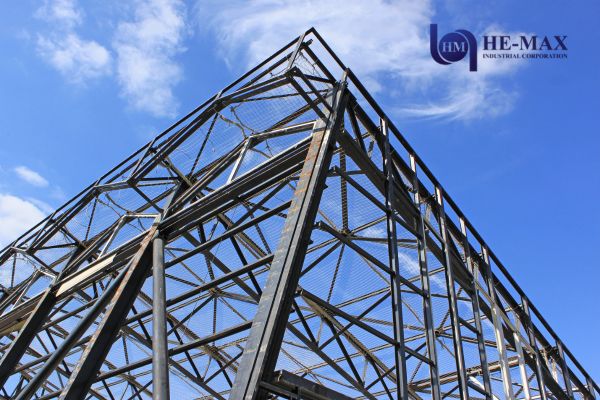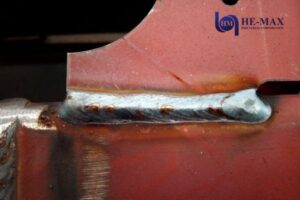
In the world of construction and manufacturing, structural steel is the foundation of modern infrastructure. Its strength and durability are critical for buildings, bridges, and industrial facilities. But the true strength of any steel structure lies not just in the material itself, but in the quality of its connections. Welding is the process that forges these connections, and the integrity of a weld is paramount. Any flaw, no matter how small, can compromise the entire structure. This is a critical concern in steel fabrication in the Philippines, where safety and quality are non-negotiable. For a broader look at this topic, you can read our introduction to steel fabrication.
This guide will walk you through the most common welding defects found in structural steel projects, their potential impact on safety and cost, and, most importantly, how to prevent them. We’ll also discuss the rigorous approach to welding quality control that a top-tier supplier like He-Max employs to protect your investments.
Understanding Welding Defects in Structural Steel
A welding defect is any irregularity in the weld that compromises its intended use and structural integrity. These defects can range from minor surface imperfections to critical internal flaws that are invisible to the naked eye. In structural steel applications, quality isn’t just about aesthetics; it’s about meeting strict safety and compliance standards. Failure to do so can have severe consequences, including structural collapse, project delays, and financial ruin.
According to a study by the American Welding Society (AWS), weld defects are a primary cause of structural failure in steel structures, highlighting the need for vigilant welding inspection and testing.
Top Structural Steel Welding Defects and How to Prevent Them
What are the most common types of welding defects in structural steel projects? While a variety of defects can occur, a few are particularly prevalent and problematic.
A. Porosity
Porosity is a defect caused by gas entrapment during the solidification of the weld metal. These trapped gas bubbles create small holes or pinholes in the weld.
- Identification: Porosity is often visible as tiny, uniform holes on the surface of the weld bead.
- Prevention: The key to preventing porosity is to ensure the base metal is clean and free of contaminants like rust, oil, or paint. Maintaining the correct flow rate of your shielding gas and using a high-quality filler metal can also prevent gas entrapment.
B. Lack of Fusion
Lack of fusion, or incomplete fusion, occurs when the weld metal does not fuse completely with the base metal or an earlier weld pass. This creates a weak spot in the joint.
- Identification: This defect is difficult to spot visually but can be detected using non-destructive weld testing methods like ultrasonic testing or radiographic inspection.
- Prevention: Proper welder technique is crucial here. Ensuring adequate heat input, correct travel speed, and meticulous joint preparation (e.g., proper beveling) will help the weld penetrate and fuse with the base metal.
C. Undercut
Undercut is a groove melted into the base metal alongside the weld bead, reducing the thickness of the base metal.
- Identification: Undercut is a visible defect that appears as a small groove or indentation along the edge of the weld.
- Prevention: This defect is often caused by an incorrect travel speed or electrode angle. By adjusting your technique to a slower, more deliberate travel speed and keeping the correct angle, you can prevent the base metal from overheating and forming a groove.
D. Cracking
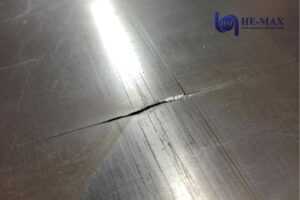
Cracking is one of the most serious and dangerous common welding defects. Cracks can be microscopic or visible and can occur in various forms: hot cracks (during solidification), cold cracks (after cooling), or crater cracks.
- Risk Factors: Cracking is often caused by high stress on the joint, excessive hydrogen content in the weld, or rapid cooling.
- Prevention: To prevent cracking, it’s vital to use proper preheating techniques, especially for thicker materials. Using the right filler material and controlling the cooling rate will also help reduce internal stresses.
The Impact of Welding Defects on Structural Integrity
How can welding defects affect the structural integrity of steel constructions? The consequences range from minor aesthetic issues to catastrophic failure.
Immediate Risks
Welding defects create weak points in a joint, which can lead to premature failure under load. A simple lack of fusion, for example, can drastically reduce the load-bearing capacity of a beam. In seismic zones like the Philippines, these defects are an even greater concern, as they can cause a structure to fail under the stress of an earthquake.
Long-Term Risks
Even if a defective weld doesn’t fail at once, it can still lead to long-term problems. Defects like undercut can create stress concentration points, making the joint susceptible to fatigue cracking over time. Porosity and other surface defects can also act as entry points for moisture, leading to corrosion and accelerated degradation of the steel. This undermines the overall construction quality assurance. Our blog on steel quality assurance in construction provides more detail on this topic.
Financial Costs
The financial implications of welding defects are significant. Reworking a faulty weld can be expensive and time-consuming, leading to project delays. In case of a structural failure, the costs can escalate to legal liabilities, insurance claims, and severe reputational damage. This is why investing in robust welding quality control is not an option—it’s a necessity. You can also read our blog on steel fabrication costs for more information.
Conclusion
The integrity of a steel structure is only as strong as its weakest weld. By understanding and actively preventing common welding defects like porosity, lack of fusion, undercutting, and cracking, you can ensure the safety and longevity of your projects. This proactive approach to welding inspection and testing is a cornerstone of effective steel fabrication in the Philippines.
At He-Max, we understand that quality is paramount. Our commitment to strict welding quality control and advanced non-destructive weld testing methods ensures that every product we deliver meets the highest industry standards. Trusting a partner who prioritizes construction quality assurance is the best way to protect your projects from costly defects and build a reputation for excellence.
Ensure Welding Quality and Safety with He-Max Industrial
At He-Max, we know that welding quality is the backbone of safe, durable, and cost-efficient construction. Even the smallest defect can compromise a project, leading to costly repairs, delays, or safety risks. That’s why we go beyond basic supply — delivering structural steel backed by strict quality standards and advanced inspection processes.
From comprehensive testing to dependable steel solutions, our goal is to protect your projects and give you peace of mind that every weld stands strong. With He-Max, you get more than just materials — you get a trusted partner dedicated to the success and safety of your structures.
- Prevent costly welding defects
- Rely on advanced inspection and testing
- Source dependable, high-quality structural steel
Contact He-Max today to secure welding-quality assurance and steel solutions you can count on.
- Trunkline: (632) 8275-3888
- Customer Service Hotline: 0917-115-8387
- Email: hemaxsales@gmail.com