Think of any structure, and they all have one thing in common: steel beams.
To the average person, they are almost unnoticed, especially as people are more familiar with cement and concrete exteriors making up most of the buildings that they see regularly. However, regardless of whether they go unnoticed or otherwise, no one can deny the importance of steel beams, being the backbone of every modern building.
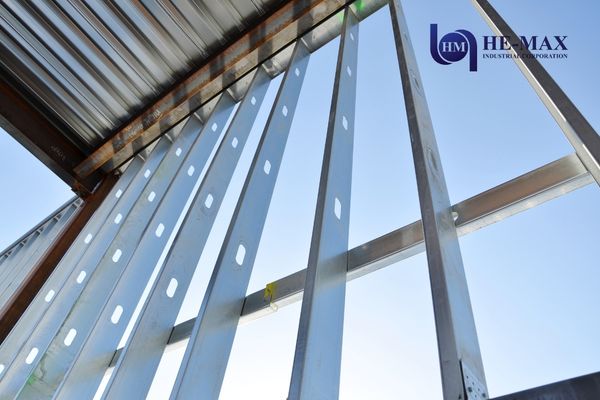
From skyscrapers and bridges to factories and heavy machinery, every structure is held up and made strong due to the various beam types. Each one of them is engineered to handle specific loads, spans, and applications.
That said, choosing the wrong beam has its own set of disadvantages. It can compromise safety, efficiency, and even cost-effectiveness. That’s why we’ll walk you through the main types of steel beams, explaining their different industrial uses.
What Types of Steel Beams Are Commonly Used in Construction?
The structural steel beams used in industrial construction include Wide Flange, Tee Beam, Channel Bar, Angle Bar, and Sheet Pile. Each of them is designed to handle specific loads and applications, ranging from simple residential structures, bridges, machinery and equipment, automotive components, and even the highest skyscrapers.
That said, what types of steel beams are used in industrial construction? Let’s look at the most common profiles and where they are applied:
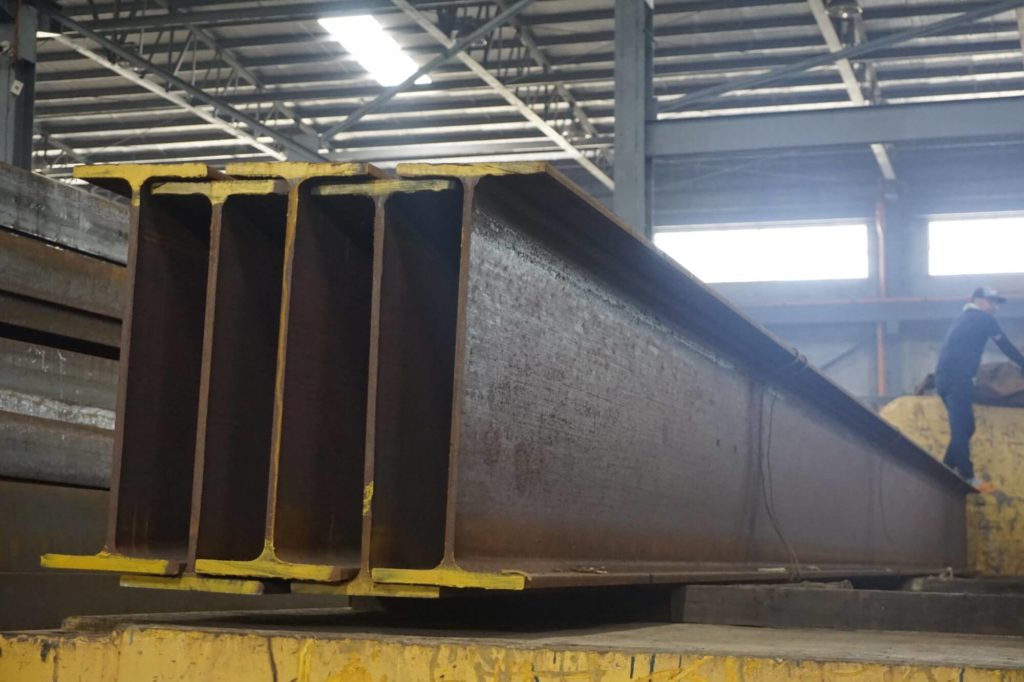
The wide flange beam, often called an I-beam, has a capitalized I-shaped cross-section with a central vertical web and horizontal flanges at the top and bottom. Think of your typical word processor cursor, and you already have a clear image of what a steel wide flange is shaped like. This design distributes loads efficiently, making it one of the strongest and most versatile beam types. This design also allows it to resist bending and shear forces.
Industrial Uses & Examples:
High-rise buildings: I-beams form the skeleton of skyscrapers, supporting vertical loads while resisting wind and seismic forces. Take the Burj Khalifa in the U.A.E as an example. Its steel framework relies heavily on wide flange beams.
Warehouses & factory frameworks: Large open spaces require beams that can span long distances without sagging. W-beams provide that strength, enabling clear floor areas for machinery and storage.
Heavy machinery support structures: In automotive plants, I-beams are used to mount conveyor systems and overhead cranes, ensuring stability under dynamic loads.
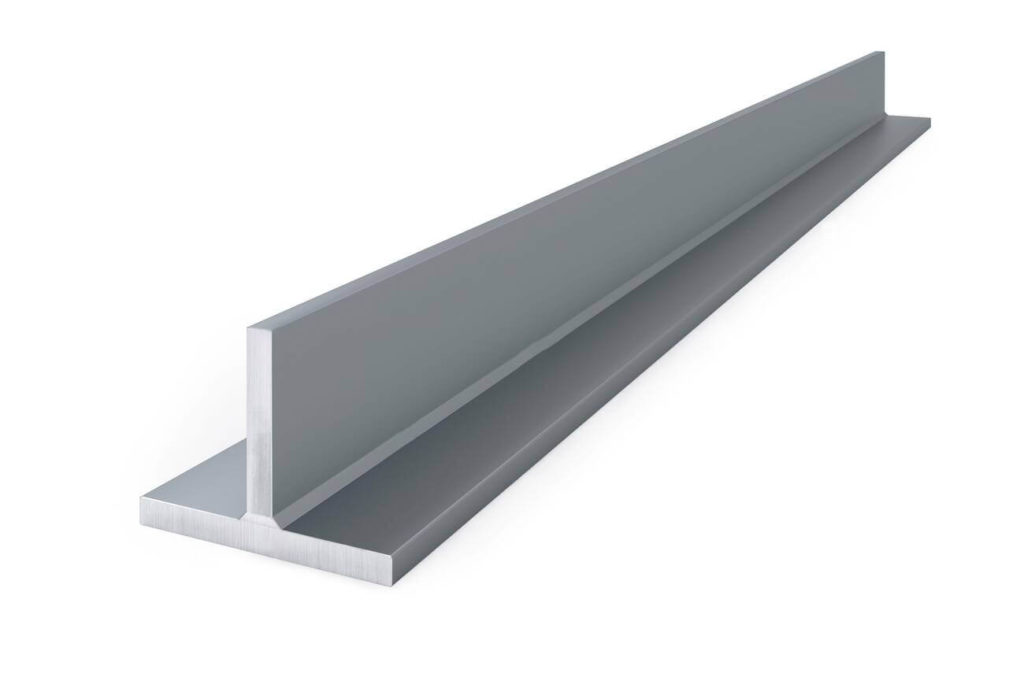
As the name suggests, this one is shaped like a letter ‘T.’ More specifically, it has a T-shaped profile resembling the top half of an I-beam. The vertical stem provides strength against shear forces, while the horizontal flange resists bending. They are often cut from I-beams or cast in reinforced concrete.
Industrial Uses & Examples:
Reinforcing structural frameworks: Tee beams are used as secondary supports in bridges, distributing loads from the deck to the main girders.
Support ribs: In shipbuilding, tee beams act as ribs inside hulls, giving rigidity to the vessel’s frame.
Platforms: Industrial platforms, such as mezzanines in factories, often use tee beams to provide lightweight yet strong support.
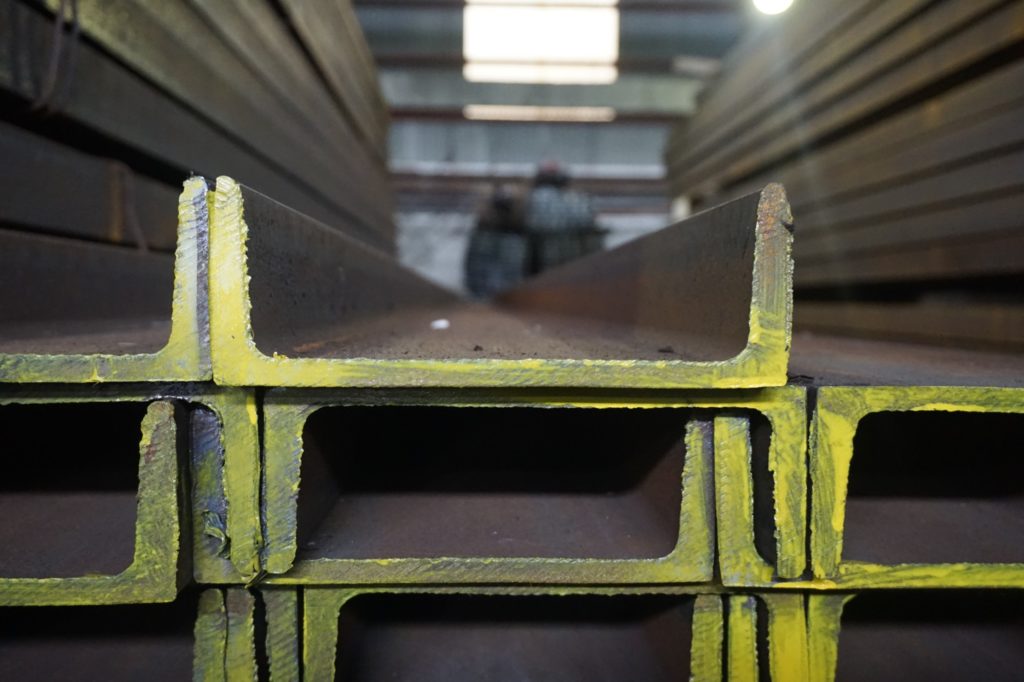
Despite its name, the channel bar is also known as the C-Beam, due to its shape. Its C-shaped profile has two parallel flanges connected by a middle panel of equal size, leaving one side open. This shape makes it lighter than I-beams while still offering good strength in one direction.
Industrial Uses & Examples:
Framing: Channel bars are widely used in modular framing systems for machinery enclosures and support racks.
Support structures: In construction, C-beams reinforce walls and floors where full I-beam strength isn’t required.
Equipment mounting: Conveyor systems often use channel bars as rails, allowing easy attachment of rollers and brackets.
Conveyor systems: In mining operations, channel beams form the backbone of conveyor frames, supporting heavy loads of ore and aggregate.
The angle bar has an L-shaped profile, with two legs meeting at a right angle. This simple yet effective design provides stability at corners and edges, making it ideal for bracing and reinforcement.
Industrial Uses & Examples:
Bracing: Angle bars are used to stiffen frameworks, preventing lateral movement in scaffolding and towers.
Frameworks: In shelving units and lightweight structures, L-beams provide corner strength without adding excessive weight.
Shelving/racking systems: Warehouses rely on angle bars for racks that hold thousands of kilograms of goods.
Structural reinforcement: In bridges, angle bars are often used as secondary members to reinforce joints and connections.
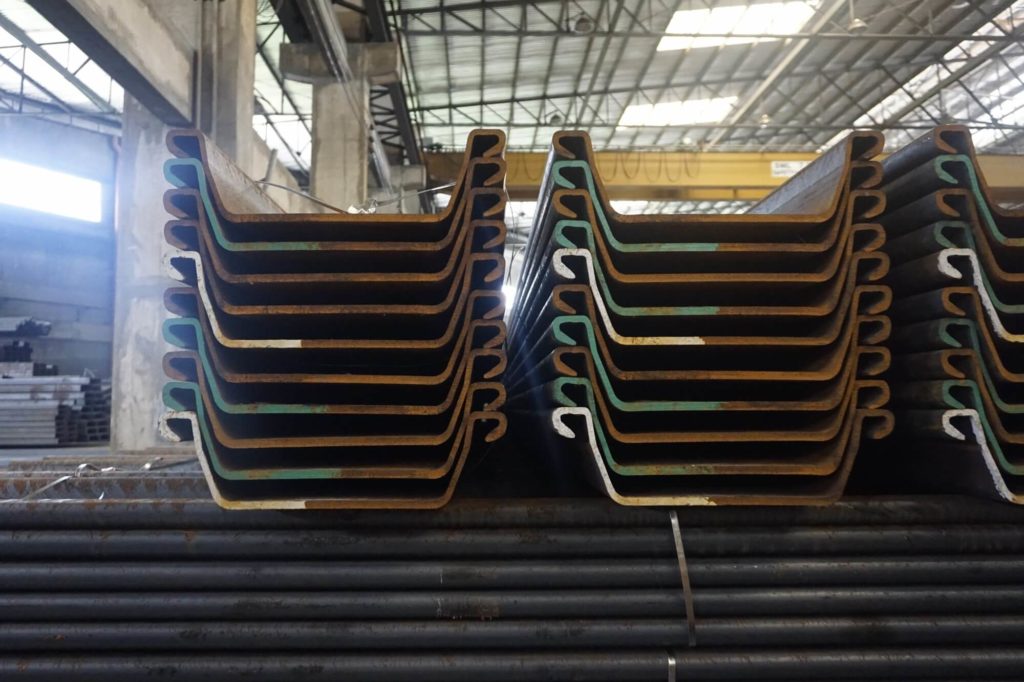
Sheet piles are interlocking steel panels driven into the ground to form continuous walls. Their U- or Z-shaped profiles allow them to lock together, creating a watertight and load-bearing barrier.
Industrial Uses & Examples:
Retaining walls: Sheet piles hold back soil in deep excavations, preventing collapse during construction of basements or tunnels.
Foundation support: In soft or unstable soils, sheet piles stabilize foundations for bridges and waterfront structures.
Waterfront/marine structures: Ports and harbors use sheet piles to build docks, seawalls, and piers, protecting against erosion and tides.
Excavation shoring: In urban construction, sheet piles are driven around excavation sites to prevent soil movement and protect nearby buildings.
How Do I Choose the Right Steel Beam for My Project?
Now that you know the different types of steel beams, the next question is: which steel beam is best for industrial structures? The answer depends on your project and its other load-bearing requirements, span length, site conditions, and industry-specific needs. After all, each beam profile is engineered for a purpose; choosing the right one ensures safety, efficiency, and cost-effectiveness.
What is each type of steel beam used for? Let’s break it down by the key factors that drive selection.
Load-Bearing Requirements
Wide Flange (I-Beam/W-Beam): So, what is a wide flange beam used for? They are best for heavy vertical loads, such as the skeleton of high-rise buildings or factory frameworks. For example, in a 20-story office tower, W-beams carry the weight of floors and resist wind forces.
Angle Bars: Used for lighter reinforcement and bracing. In warehouse shelving, angle bars prevent racks from collapsing under uneven loads.
Sheet Piles: Handle lateral loads from soil and water pressure. In a port seawall, sheet piles resist the constant push of tides and sediment.
Span Length and Structural Design
I-Beams: Ideal for long spans in bridges or warehouses, where beams must stretch across wide spaces without sagging. Example: A logistics hub with 40-meter clear spans uses I-beams to keep the floor open for forklifts.
Tee Beams: Often used as secondary members to support shorter spans, like mezzanine platforms or concrete floor ribs.
Channel Bars: Effective for medium spans in conveyor systems or equipment frames, where lighter loads are expected.
Site Conditions and Environmental Exposure
Stainless I-Beams: Chosen for marine or chemical plants where corrosion resistance is critical. Example: Offshore oil rigs use stainless W-beams to withstand saltwater exposure.
Sheet Piles: Specifically designed for soil and water retention. In excavation sites, Z-type sheet piles prevent soil collapse even in wet, unstable ground.
Angle Bars: Used in outdoor frameworks like transmission towers, where they provide bracing against wind and seismic activity.
Industry-Specific Needs
Warehousing: I-beams for roof trusses, angle bars for shelving, and channel bars for conveyor frames.
Manufacturing: Tee beams for platforms and mezzanines, I-beams for machinery support, and channel bars for equipment mounting.
Marine: Sheet piles for docks and seawalls, stainless beams for shipbuilding frameworks.
Infrastructure: I-beams for bridges, angle bars for reinforcement, and sheet piles for foundation shoring in tunnels and highways.
Source Your Steel Beams from Us!
When it comes to industrial construction, choosing the right supplier is just as important as choosing the right beam profile. We at He-Max Industrial Corporation are a trusted importer, wholesaler, and fabricator of steel beams in the Philippines, offering wide flange beams, tee beams, channel bars, angle bars, and sheet piles tailored for diverse industrial applications. We also offer affordable wide flange prices in the Philippines, among others.
He-Max Industrial Corporation stands out as a trusted steel supplier and fabricator in the Philippines, delivering precision and reliability across every project.