The Philippines is in the middle of a sustained construction boom. Infrastructure programs, industrial estate expansions, and commercial developments are driving consistent demand for structural steel — and putting pressure on contractors, developers, and manufacturers to deliver faster, cheaper, and at higher quality than ever before.
That pressure raises a question every project team eventually faces: should steel processing be handled in-house, or handed off to a specialist?
For most mid-to-large scale operations, outsourcing steel fabrication in the Philippines is the smarter, more cost-efficient answer. Here’s why — and how to do it right.
What Is Structural Steel Processing and Custom Metal Fabrication?
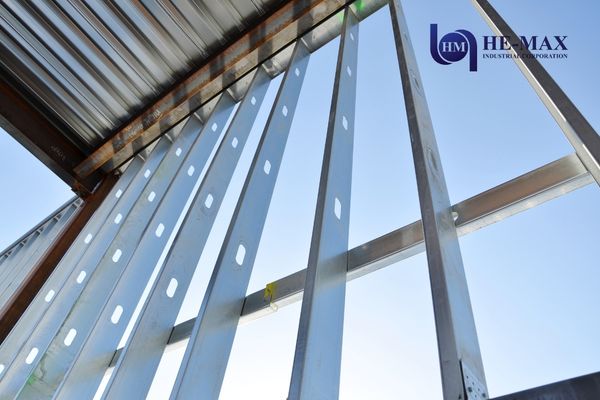
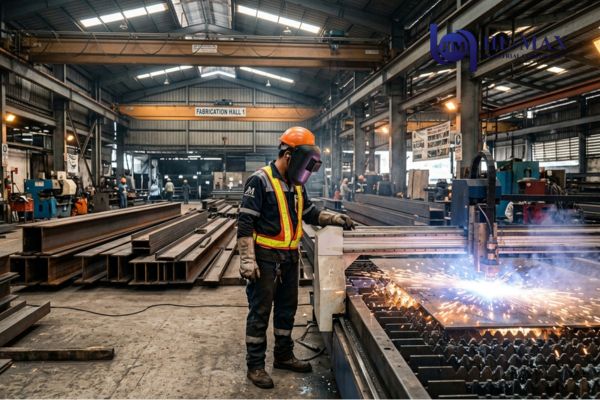
Structural steel processing covers all the operations that transform raw steel into project-ready components. This includes:
- Cutting — sawing, shearing, or laser cutting steel to specified dimensions
- Drilling — creating bolt holes, connection points, and openings in structural members
- Bending — forming steel into angles, curves, and custom profiles
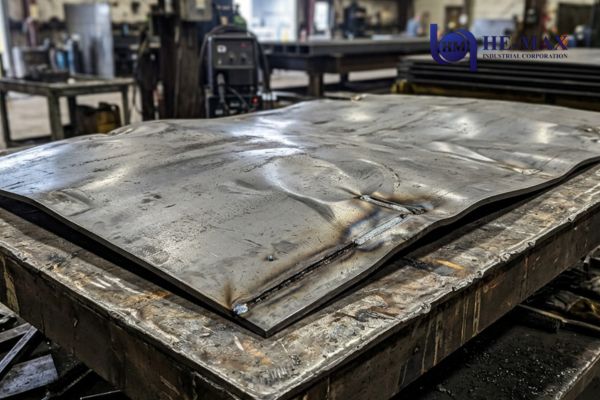
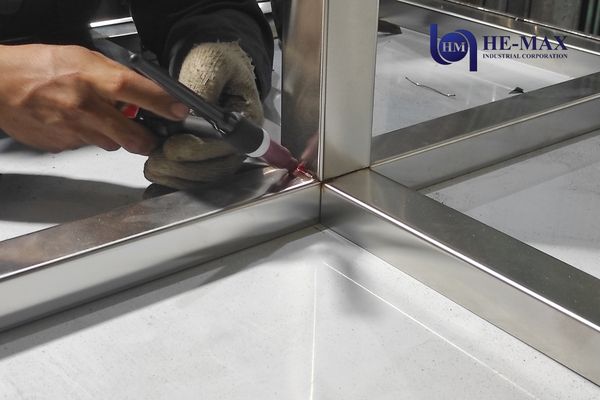
- Welding — joining steel components into assemblies or finished structures
Custom steel fabrication goes a step further. While a standard supplier delivers stock materials, a custom metal fabricator works from drawings or specifications to produce components built precisely for your project — whether that’s a steel frame for a warehouse, a structural truss, or a complex industrial assembly.
Industries that rely heavily on structural steel fabrication in the Philippines include construction, shipbuilding, oil and gas, manufacturing, and infrastructure development. Project scopes range from single-building frames to multi-phase industrial installations requiring thousands of fabricated pieces.
Key Benefits of Outsourcing Steel Fabrication
Outsourcing structural steel processing in the Philippines delivers advantages that go well beyond cost savings — though cost savings are significant. Here’s what businesses consistently gain:
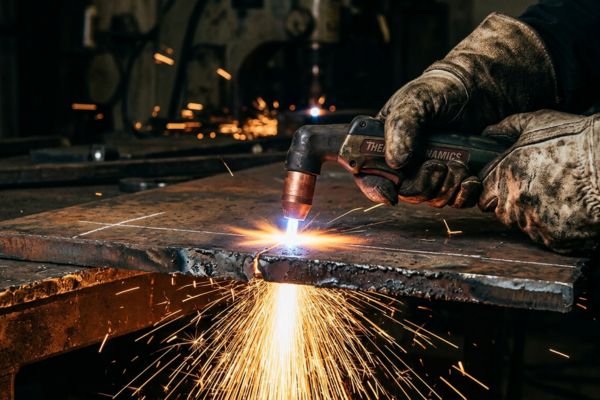
- Lower overhead costs. Fabrication equipment — press brakes, plasma cutters, welding stations, CNC machinery — requires substantial capital investment and ongoing maintenance. Outsourcing converts those fixed costs into variable ones tied directly to project output.
- Access to specialized technology. Established steel fabrication companies in the Philippines invest continuously in modern equipment. Outsourcing gives you access to capabilities — precision laser cutting, automated drilling, certified welding — that would be prohibitively expensive to replicate in-house.
- Faster turnaround. Dedicated fabrication facilities are built for throughput. With optimized workflows, experienced operators, and purpose-built machinery, they can compress production timelines that an in-house setup would struggle to match.
- Consistent quality control. Professional fabricators work to documented standards and specifications. Quality checkpoints are built into the production process, reducing the risk of non-conforming components reaching the job site.
- Scalability on demand. Whether your project needs ten fabricated pieces or 10,000, outsourcing lets you scale production without hiring, training, or retooling. That flexibility is especially valuable in the Philippines’ project-driven construction environment.
In-House Steel Processing vs. Outsourcing — Which Makes More Sense?
The in-house vs. outsourcing decision comes down to a straightforward cost-benefit analysis — and for most project teams, outsourcing wins.
| Factor | In-House | Outsourced |
| Capital investment | High — equipment, facility, tooling | None |
| Labor costs | Ongoing — wages, benefits, training | Included in service pricing |
| Equipment maintenance | Your responsibility | Supplier’s responsibility |
| Production downtime risk | Internal — your problem to solve | Absorbed by supplier |
| Scalability | Limited by capacity | Flexible by design |
| Quality accountability | Internal | Contractual |
In-house processing can make sense for companies with extremely high, consistent production volumes where dedicated capacity becomes cost-efficient over time. It also works for highly specialized applications where proprietary processes need to stay internal.
But for most mid-to-large scale projects, the hidden costs of in-house fabrication — equipment downtime, staff turnover, maintenance interruptions, quality failures — erode the apparent savings quickly. Outsourcing transfers those risks to a partner whose entire business depends on managing them well.
The accountability structure alone is a compelling reason. When a fabrication partner misses a specification or a deadline, there’s a clear contractual remedy. When an in-house team does the same, the cost stays internal.
How to Choose the Right Custom Metal Fabricator in the Philippines
Finding a reliable custom steel fabrication partner requires more than a price comparison. Use this framework when evaluating options:
- Fabrication capabilities and machinery — Can they handle your material grades, tolerances, and processing requirements? Ask specifically about their cutting, drilling, bending, and welding capacity.
- Project experience and references — Review their portfolio for projects like yours in scope, industry, and complexity. Client references from construction or industrial applications carry significant weight.
- Lead times and production capacity — Understand their typical turnaround for your order volume and confirm they have capacity during your project window. A fabricator that’s perpetually backlogged is a schedule risk.
- Certifications and technical expertise — Look for documented quality standards, certified welders, and engineering support. These signal a fabricator that takes compliance seriously.
- Value-added services — Delivery coordination, installation support, and after-sales service reduce the operational burden on your team. A fabricator that handles logistics end-to-end is worth more than one that hands off at the gate.
How He-Max Industrial Supports Your Steel Fabrication Needs
He-Max Industrial brings together the product depth and processing capability that construction, manufacturing, and industrial clients need from a single, reliable partner.
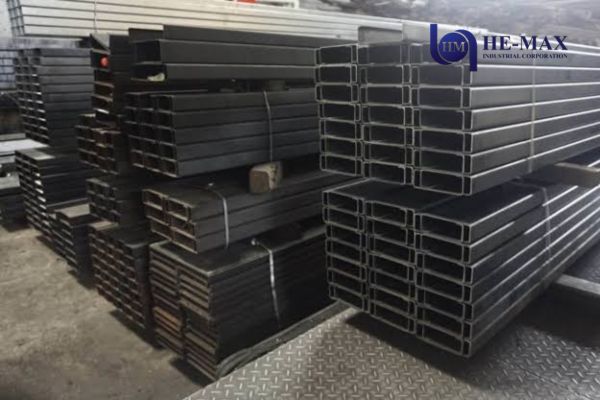
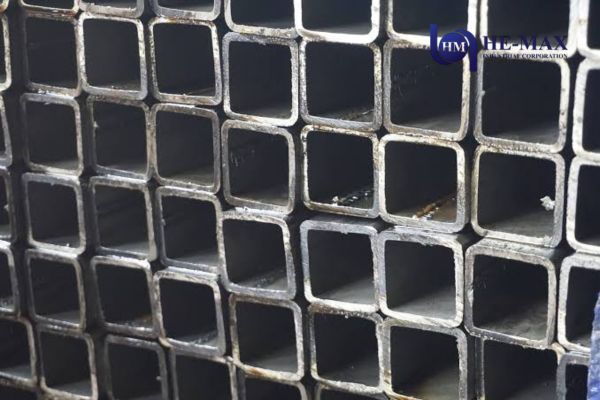
As a trusted steel fabrication company in the Philippines, He-Max Industrial offers structural steel processing across a comprehensive range of products — from structural sections and flat products to long products — all backed by technical support and responsive customer service.
Their custom fabrication services are designed to reduce the gap between raw material procurement and project-ready components. Rather than managing multiple vendors for supply and processing, clients can consolidate both through He-Max Industrial — simplifying procurement, shortening lead times, and reducing coordination overhead.
He-Max Industrial’s team brings hands-on experience across construction, manufacturing, and industrial applications, offering pre-sales consultation to ensure specifications are accurate before production begins.
To explore their steel processing services and full fabrication capabilities, visit He-Max Industrial.
Conclusion: Outsourcing Is a Strategic Advantage, Not Just a Cost Decision
The case for outsourcing steel fabrication in the Philippines isn’t about saving money on equipment — though that’s real. It’s about accessing better technology, faster production, tighter quality control, and a partner who bears the operational risk of getting it right.
For companies managing complex construction or industrial projects, the right fabrication partner reduces schedule risk, improves component consistency, and frees internal resources to focus on higher-value work.
Ready to simplify your steel processing?
Explore He-Max Industrial’s full range of industrial steel fabrication services and structural steel products at He-Max Industrial, or reach out directly to discuss your project requirements and get expert guidance.