If you have ever compared quotes from two different suppliers and wondered why the price per kilo varies so much for what looks like the same “MS plate,” the answer usually comes down to grade. Mild steel (MS) plate is one of the most widely used materials in Philippine construction and fabrication, valued for its strength, weldability, and versatility. But not all MS plates are created equal, and choosing the wrong grade can affect everything from structural safety to long-term cost.
Two grades come up again in local projects: A36 and A572 Grade 50. Both are staples for any mild steel plate supplier, yet they behave differently under load and serve different purposes. Getting this choice right matters as much as sourcing from a reliable MS plate supplier in the Philippines, since even the best-sourced material will underperform if the grade doesn’t match the application. This guide breaks down the differences, so you can specify the right plate the first time.
What Is MS Plate and Why Does Grade Matter?
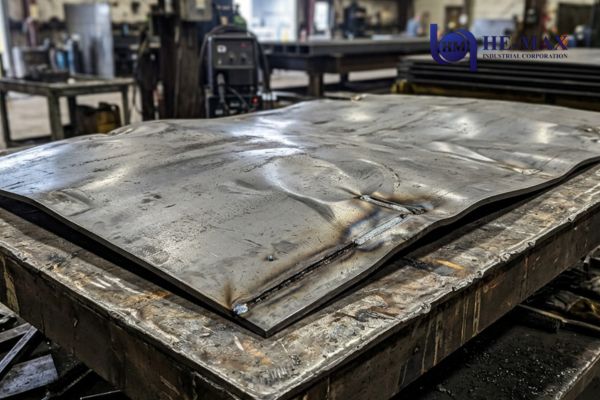
MS plate is a flat-rolled steel product formed by hot rolling steel slabs into flat sheets of varying thickness. It is used across construction, shipbuilding, machinery fabrication, and industrial equipment manufacturing because it combines decent strength with good workability at a manageable cost.
Grade matters because it determines how a plate performs under stress. Two plates can look identical on a warehouse floor, yet one may yield a much lower load than the other or resist cracking differently when welded or cut. Specifying the wrong grade can mean over-engineering in a simple bracket (wasting budget) or under-engineering for a load-bearing member (creating a safety risk).
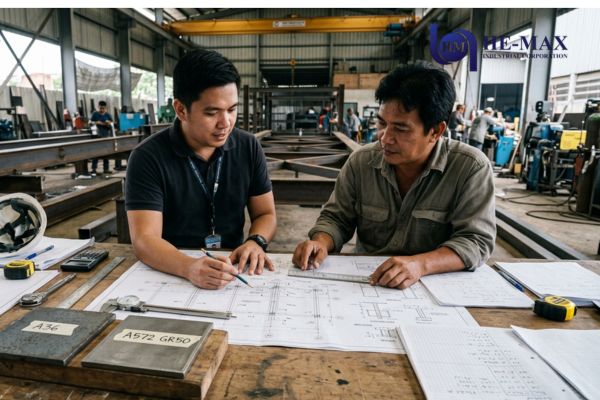
In the Philippines, MS plate grades are typically classified using American Society for Testing and Materials, or ASTM steel plate standards, since most local fabrication and structural design references trace back to ASTM specifications. Some imported stock also references Japanese Industrial Standards (JIS) equivalents. A reputable supplier should be able to provide mill certificates confirming which standard a given batch of plate meets.
MS Plate A36 — Properties and Best Uses
A36 is the workhorse of general structural steel plate in the Philippines. It is a low-carbon steel plate known for consistent quality, excellent weldability, and moderate strength that suits most of the everyday fabrication work.
Key mechanical properties of A36:
| Property | Typical Value |
| Minimum yield strength | 250 MPa (36,000 psi) |
| Tensile strength | 400–550 MPa |
| Elongation | Around 20% (varies by thickness) |
Because of this balance of strength and ductility, the A36 steel plate is straightforward to cut, weld, and form, which keeps fabrication labor and consumables lower compared to higher-strength alternatives.
Common applications include:
- General structural fabrication
- Base plates and gussets
- Machinery components and frames
- Shipbuilding and construction projects
For contractors sourcing this grade, He-Max Industrial carries MS Plate A36 in a range of thicknesses suited to standard fabrication needs.
MS Plate A572 Grade 50 — Properties and Best Uses
A572 Grade 50 is a high-strength, low-alloy structural steel plate designed to carry more load per unit of weight than A36. It achieves this through a refined chemical composition rather than simply thicker material, which is useful when a project has weight or space constraints.
Key mechanical properties of A572 Grade 50:
| Property | Typical Value |
| Minimum yield strength | 345 MPa (50,000 psi) |
| Tensile strength | 450–620 MPa |
| Elongation | Around 18–21% (varies by thickness) |
That higher yield strength, roughly 38% above A36, means engineers can often specify thinner sections to carry the same load, which can reduce overall steel tonnage on a project.
Common applications include:
- Heavy structural steel construction
- Bridges and highway infrastructure
- Industrial equipment and machinery
- Buildings requiring higher strength-to-weight efficiency
He-Max Industrial stocks MS Plate A572 Grade 50 for projects that call for this added performance margin.
A36 vs. A572 Grade 50: Which MS Plate Grade Should You Choose?
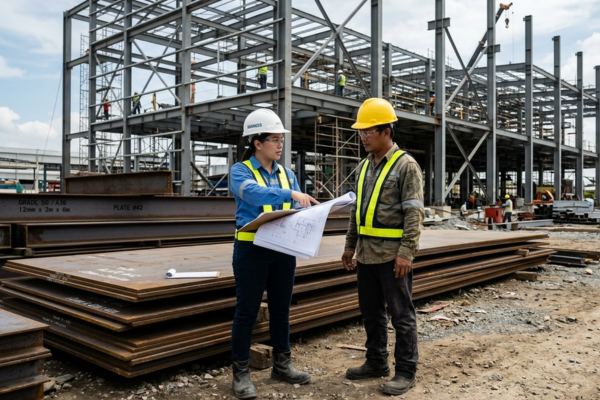
The short answer: choose A572 Grade 50 when your structural calculations call for higher load capacity or a lighter overall structure and choose A36 for standard fabrication where cost efficiency matters more than maximum strength.
- Strength requirements. If a design engineer’s load calculations require a higher yield strength (for example, in long-span trusses or heavy machinery bases), A572 Grade 50 gives you that margin without oversizing the member. For general framing, brackets, and non-critical structural work, A36 is more than sufficient.
- Budget considerations. A36 is typically more cost-effective per kilo and widely stocked, which keeps MS plate price in the Philippines more predictable for routine projects. A572 Grade 50 commands a premium, but that cost can be offset by using thinner, lighter sections.
- Weldability and workability. Both grades are weldable using standard procedures, though A36’s lower carbon equivalent makes it marginally easier to fabricate without special preheat or filler considerations, especially on thicker sections.
Quick project guide:
| If your project involves… | Consider |
| General brackets, frames, base plates | A36 |
| Bridges, heavy industrial structures | A572 Grade 50 |
| Tight budget, standard loads | A36 |
| Weight-sensitive design, high loads | A572 Grade 50 |
Tips for Sourcing the Right MS Plate in the Philippines
- Work with a certified supplier. Confirm that the supplier can provide ASTM-compliant material with proper documentation, not just a verbal assurance of grade.
- Check available thicknesses and sizes. Match plate dimensions to your drawings before ordering to avoid costly cutting waste or delays.
- Request mills test reports. These reports verify actual mechanical properties, which matters for projects reviewed by structural engineers or regulators such as the Department of Public Works and Highways.
- Consider lead times and stock availability. A supplier with ready inventory of both A36 and A572 Grade 50 helps keep project schedules on track, particularly for time-sensitive builds.
If you need plates cut to size, He-Max Industrial custom size fabrication and base plate cutting and drilling services can prepare material to your exact specifications before it reaches the jobsite. Ready to move forward? You can get in touch with He-Max Industrial sales team to request a quote or discuss which grade fits your project.
He-Max Industrial — Your Reliable MS Plate Supplier in the Philippines
He-Max Industrial Corporation carries both A36 and A572 Grade 50 as part of its broader steel plates line, alongside structural sections and bars for complementary fabrication needs. As a MS plate supplier in the Philippines, He-Max Industrial prioritizes ASTM-compliant stock, transparent documentation, and consistent availability so contractors and fabricators can plan projects with confidence.
Beyond supply, He-Max Industrial offers in-house steel fabrication services including shearing and bending, fiber laser cutting, and metal shear cutting, which means engineers and procurement officers can source raw plate and processing under one roof. You can review examples of past work in our project portfolio.
Conclusion
A36 and A572 Grade 50 both have a place in Philippine construction and fabrication, but they are not interchangeable. A36 remains the practical, cost-effective choice for general structural work, while A572 Grade 50 earns its premium in applications demanding higher strength-to-weight performance, such as bridges and heavy industrial structures. Matching the grade to your load requirements, budget, and fabrication process is the difference between a plate that simply fits and one that performs.
Whichever grade your project calls for, working with an established MS plate supplier in the Philippines that can back up its stock with proper mill certifications makes the sourcing decision far less stressful. Explore He-Max Industrial steel products or reach out directly to discuss thicknesses, lead times, and pricing for your next project.