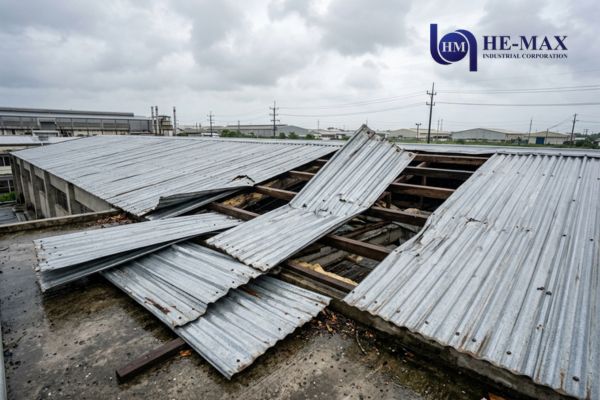
Typhoons can leave a roof with obvious damage, such as missing panels, while also creating less visible problems around fasteners, overlaps, and areas where sheets have been lifted or deformed. After a storm, property owners and contractors often face a major decision: repair the damaged sections or replace the roofing altogether.
Checking the galvanized sheet price in the Philippines can help when preparing a post-typhoon budget, but material price is only one part of the decision. The extent of corrosion, deformation, leaks, remaining roof life, sheet thickness, and the condition of the supporting structure all influence whether repair or replacement makes better financial and practical sense.
A thorough inspection helps distinguish localized damage that can still be repaired from deterioration that has already compromised the roofing system.
How Do You Know If a Galvanized Roof Needs Repair or Replacement After a Typhoon?
A galvanized roof can usually be repaired when damage is minor and isolated. Replacement becomes the safer option when corrosion, deformation, punctures, or failed connections affect multiple sections or compromise the roof’s ability to keep out water and withstand wind.
A post-typhoon inspection should look beyond whether the roof is still physically attached. Contractors should examine several conditions:
- Surface rust: Light corrosion that has not penetrated the sheet may be treatable. Flaking metal, holes, or extensive rust-through indicates more serious deterioration.
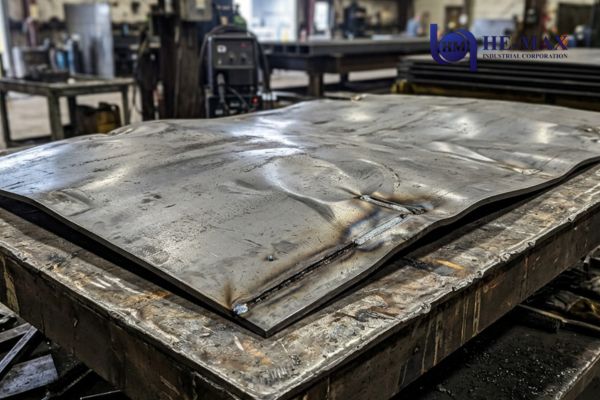
- Dents and deformation: Small dents may be primarily cosmetic, but deep deformation can interfere with drainage and create areas where water collects.
- Fastener damage: Loose or missing screws and lifted edges can allow wind-driven rain beneath the roof.
- Punctures and tears: Flying debris can puncture galvanized iron sheets, while intense winds may tear material around fastening points.
- Previous condition: A new roof with one damaged section is a better candidate for repair than an aging roof that was already leaking or corroding before the typhoon.
The inspection should also cover flashings, ridge sections, gutters, purlins, overlaps, and connections. A roofing sheet may appear serviceable while the components securing it have already been weakened.
When Repair Is the Right Call
Repair is practical when damage is confined to a small portion of an otherwise sound roof.
Consider a warehouse where a typhoon loosens several fasteners along one roof edge but leaves the panels flat and intact. Replacing the entire roof would usually be unnecessary if an inspection confirms that the sheets and supporting members remain serviceable.
Typical repairable conditions include:
- Minor surface corrosion without perforation
- Small, isolated punctures
- Loose or missing fasteners
- Slightly lifted edges without permanent sheet deformation
- Localized sealant or flashing failures
Depending on the condition, repairs may involve replacing fasteners, resealing joints, treating surface corrosion, or properly patching a small, localized damaged section.
Repair becomes less economical when maintenance crews repeatedly return to address leaks in different areas. Continuing to patch a deteriorating roof can increase maintenance expenses without resolving the underlying problem.
When Full Replacement Is Necessary
Replacement should be considered when the roof can no longer provide dependable weather protection, or when damaged sheets cannot be securely restored.
Common warning signs include widespread rust-through, multiple bent or torn panels, recurring leaks, severe damage around fastener holes, and extensive deformation of corrugated galvanized iron sheets.
A roof approaching the end of its service life also deserves closer scrutiny. Installing patches on heavily deteriorated material may stop one leak, only for another weakened area to fail during the next period of heavy rain or high winds.
Safety becomes especially important in locations frequently exposed to typhoons. Panels weakened around fasteners or permanently distorted may no longer perform as intended during subsequent severe weather. If purlins, framing, or other supporting components are also damaged, a qualified professional should assess the roofing system before repair or replacement proceeds.
Galvanized Sheet Price in the Philippines: What Affects Roof Replacement Cost?
There is no single standard replacement price because the total depends on sheet specifications, roof area, accessories, labor, removal requirements, and the condition of the supporting structure.
When researching galvanized sheet prices in the Philippines, buyers should compare products based on the required thickness, dimensions, coating specification, and quantity rather than choosing based on unit price alone.
The total roof replacement cost in the Philippines also extends beyond the cost of galvanized roofing sheets. A complete project budget may include:
| Cost Factor | Why It Matters |
| Sheet thickness | Material requirements affect the cost per sheet |
| Coating specification | Coating requirements influence corrosion protection and pricing |
| Sheet length and profile | Dimensions and profiles affect material requirements |
| Roof area | Determines the quantity of roofing material needed |
| Fasteners and flashing | Damaged accessories may require replacement |
| Labor | Removal and installation complexity affect project cost |
| Structural repairs | Damaged purlins or framing can expand the scope |
| Delivery | Location, quantity, and logistics can influence delivered cost |
For larger commercial or industrial projects, requesting a project-specific quotation is more reliable than estimating costs based on the prices of individual retail sheets. Quantity, required dimensions, specifications, delivery location, and processing requirements can all affect supplier pricing.
It is also important to compare immediate repair costs with long-term expenses. If an aging roof requires repeated patching and continues to allow water into insulation, ceilings, equipment, or stored materials, replacement may eventually be more economical than ongoing repairs.
Can a Rusted or Dented Galvanized Sheet Still Be Repaired?
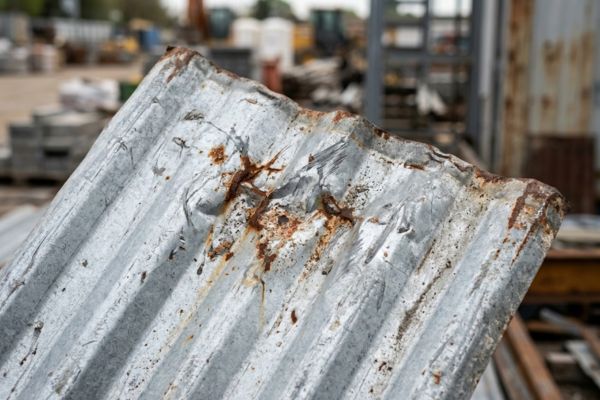
Yes. Minor surface rust or shallow dents may be repairable if the steel remains sound, and the damage has not compromised drainage, connections, or weather resistance.
Surface corrosion should be addressed before it progresses. Appropriate surface preparation, followed by the application of a compatible protective coating, may help extend the service life of the material when corrosion remains superficial.
Rust-throughs are different. Once corrosion creates holes or reduces the amount of metal around a fastening point, applying a coating does not restore the steel that has already been lost.
The same principle applies to dents. A shallow dent that does not interfere with drainage or panel connections may not require replacement. Severe deformation, however, can create low areas where rainwater collects or distorts overlaps between adjacent panels.
Patching should also be evaluated according to its intended lifespan. A temporary weatherproof patch can help protect a building immediately after a storm, but it should not be treated permanently.
Inadequate repairs can allow water to continue entering the building, potentially affecting insulation, ceilings, electrical installations, stored materials, and supporting steel components.
Choosing Quality Galvanized Sheets for Roof Replacement
Replacing damaged roofing provides an opportunity to review whether the existing material specification is appropriate for the building, location, and environmental exposure.
Material selection should consider the required thickness, dimensions, coating, profile, supporting structure, and applicable project specifications. Depending on the project, contractors may also need to refer to relevant Philippine or international material standards.
For example, ASTM A653/A653M covers hot-dip zinc-coated (galvanized) and zinc-iron alloy-coated steel sheets. Philippine construction projects may also be subject to relevant PNS, BPS, DPWH, structural, and project-specific requirements.
For contractors and procurement teams sourcing GI sheets in the Philippines, the required specifications should therefore come before price comparisons. Before placing an order, confirm:
- Required base metal thickness
- Sheet dimensions
- Roofing profile
- Coating specification
- Required quantity
- Applicable project or engineering specifications
He-Max Industrial Corporation supplies G.I. sheets and coils for construction and industrial applications. Projects that also require steel processing can review He-Max’s steel fabrication services.
Selecting roofing material should not simply mean choosing the thickest sheet available. The appropriate material needs to match the roof design, supporting structure, environmental conditions, and engineering requirements of the project.
Making the Repair-or-Replace Decision
After a typhoon, isolated surface rust, small punctures, loose fasteners, or minor lifting may justify repair when the surrounding roof remains in good condition. Widespread corrosion, severely distorted panels, recurring leaks, damaged connections, and extensive deterioration are stronger reasons to consider replacement.
When estimating the project, compare more than the immediate cost of patching. Material specifications, labor, accessories, structural repairs, remaining service life, and the current galvanized sheet prices in the Philippines all contribute to the actual cost of restoring the roof.
Most importantly, evaluate the roof as a complete system rather than inspecting damaged sheets in isolation. Fasteners, flashings, overlaps, purlins, drainage, and adjacent panels can determine whether a repair will remain dependable during future severe weather.
Need to replace storm-damaged galvanized sheets? Contact He-Max Industrial Corporation current pricing and high-quality GI sheets for your roofing project. Discussing the required thickness, dimensions, quantities, and specifications before ordering can help ensure the material matches the actual project requirements.