Sheet metal warping is one of those fabrication problems that can appear minor at first but become expensive quickly. A plate that bows, twists, or moves outside tolerance may require straightening, rework, additional inspection, or complete replacement. For contractors and fabricators sourcing material from an MS plate supplier in the Philippines, reducing that risk starts before the first cut or weld is made.
Warping is primarily caused by an imbalance of stress in metal. Welding and thermal cutting can create this imbalance through localized heating and cooling, while rolling stresses, material inconsistencies, cutting sequences, and work holding can make the problem worse.
Most warping can be reduced through a combination of proper material selection, controlled heat input, suitable cutting methods, effective fixturing, and planned fabrication sequences.
Why Does Sheet Metal Warp During Fabrication?
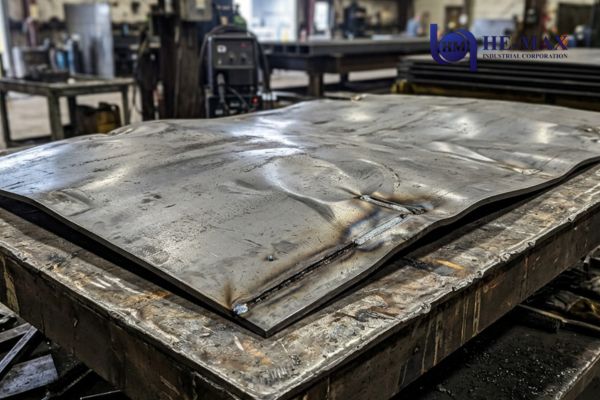
Sheet metal warps because different areas of the material expand, contract, or release internal stresses unevenly, pulling the plate away from its intended shape.
Several factors can contribute to this distortion.
Uneven Heating and Cooling During Welding
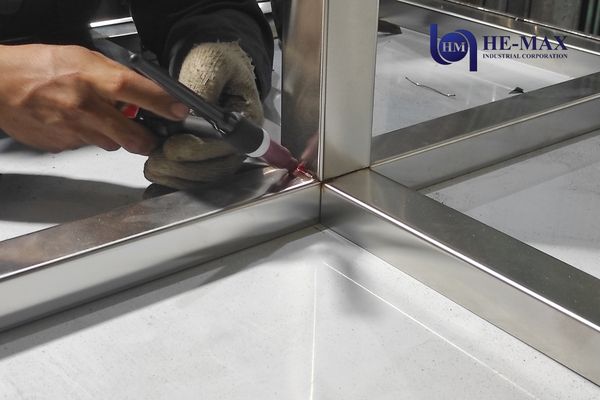
Steel expands when heated and contracts as it cools. During welding, however, heat is concentrated around the weld rather than distributed evenly throughout the workpiece.
The cooler surrounding material restricts expansion. When the heated area cools and contracts, it can pull adjacent metal toward the weld. Depending on the joint design and heat distribution, this can result in bowing, twisting, angular distortion, or localized waviness.
Thin material is particularly sensitive because it has less stiffness to resist these forces.
Residual Stress from Manufacturing
Steel can retain residual stresses from rolling, cooling, leveling, forming, and other manufacturing processes. These stresses may remain balanced while the plate is intact.
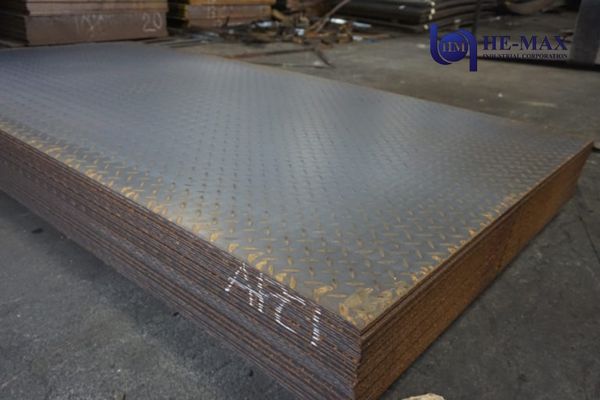
Once material is removed, that balance can change. Cutting a long, narrow component from a hot rolled steel plate, for example, can allow previously restrained stresses to redistribute and cause the finished piece to move.
For fabrication teams, this means distortion is not always evidence of an incorrect welding procedure. Incoming material condition should also be considered during root-cause analysis.
Incorrect Cutting Sequence or Method
Cutting order matters, particularly when several components are nested within one large sheet or plate.
Removing too much material from one side can release stress unevenly. Thermal processes may also introduce localized heat that affects dimensional stability.
Fabricators should therefore consider both material utilization and the sequence in which components are separated from the parent plate.
Inconsistent Material Quality or Thickness
Variations in plate thickness, flatness, mechanical properties, or residual stress can make fabrication results less predictable.
A project using a mild steel plate, for example, should identify the required grade and specification rather than treating all mild steel as interchangeable.
Recognized material specifications provide engineers, procurement teams, and fabricators with a common basis for evaluating material requirements. ASTM A36/A36M, for example, covers carbon structural steel shapes, plates, and bars used in riveted, bolted, and welded construction.
Improper Clamping and Work holding
A poorly supported sheet can move as heat and stress develop during fabrication. Correct clamps and fixtures help maintain alignment while welding, cutting, or forming takes place.
The objective is to control restraint rather than simply applying as much clamping force as possible. Fixture placement should support critical dimensions while still allowing the planned fabrication sequence to be completed correctly.
Signs Your Sheet Metal Has Warped
Warping is sometimes visible immediately, but smaller dimensional changes may only become apparent during assembly or quality inspection.
Common signs include:
- Bowing along an edge or across the plate surface
- Twisting from one end of a component to another
- Localized waves near welded or heat-affected areas
- Components that no longer fit correctly during assembly
- Uneven gaps between parts prepared for welding
- Bolt holes or connection points that no longer align
- Flatness, angle, or dimensional measurements outside specified tolerances
For larger fabrication jobs, dimensional checks should be performed at appropriate production stages rather than waiting until final assembly. Detecting movement early usually provides more options for correction.
How Do You Prevent Sheet Metal from Warping When Welding or Cutting?
Prevent sheet metal from warping by controlling heat input, distributing fabrication stresses, using proper fixtures, selecting an appropriate cutting process, and starting with material that meets the project’s specifications.
The following practices address the most common causes.
- Use Proper Clamping and Fixturing
Secure material to a stable surface and support areas where movement could affect critical dimensions.
This is particularly important for long plates, frames, panels, and assemblies. A small movement at one point can translate into a much larger alignment issue farther along the component.
Fixtures should also be designed around the fabrication sequence. Poorly positioned clamps can restrict access, interfere with welding, or create unnecessary restraint.
- Control Heat Input During Welding
More heat does not necessarily produce a better weld. Welding parameters should follow the applicable welding procedure and material requirements.
Depending on the joint and procedure, distortion-control techniques can include:
- Balanced welding
- Skip welding
- Back-step welding
- Alternating weld locations
- Shorter weld runs
- Appropriate amperage
- Controlled travel speed
The principle behind these techniques is straightforward: avoid allowing heat and shrinkage to become heavily concentrated in one area.
Where possible, weld sequences should distribute thermal effects across the component instead of completing one highly restrained area before moving to another.
- Choose the Appropriate Cutting Method
The right cutting process depends on material type, thickness, geometry, tolerances, edge requirements, and production volume.
Mechanical shearing avoids the localized thermal effects associated with processes that use heat, although it can introduce mechanical deformation if equipment setup, blade clearance, or material selection is unsuitable.
Laser cutting concentrates energy within a narrow cutting area and can produce detailed CNC-controlled profiles. He-Max provides fiber laser cutting for projects requiring precise profiles and repeatable cuts.
For suitable straight-cut applications, metal shear cutting may provide an alternative where the geometry and plate thickness are appropriate.
Selecting the process based on the actual fabrication requirement is more effective than using one cutting method for every job.
- Consider Stress Relief Where Applicable
Certain components or fabrication procedures may benefit from stress-relief or normalizing treatments.
These processes should not be applied automatically. Heat treatment requirements depend on the material grade, component geometry, previous fabrication steps, intended service, and applicable engineering specifications.
For critical work, the treatment should follow an approved procedure rather than relying on general shop practice.
- Inspect Material Before Fabrication
Before cutting begins, check whether the incoming material meets the required dimensions, thickness, flatness, and specification. Working with a reliable steel supplier in the Philippines contractors and fabricators can depend on for consistent material specifications can also help reduce variability before production begins.
This step is particularly valuable for repeat production. Identifying an incoming material issue before dozens of components have been processed is significantly less costly than discovering it during final assembly.
The same attention is necessary for companies handling stainless steel fabrication in Caloocan. Stainless steels and carbon steels do not respond identically to heat, so welding parameters, cutting procedures, fixtures, and distortion-control practices should account for the material being processed.
Can Warped Sheet Metal Be Fixed?
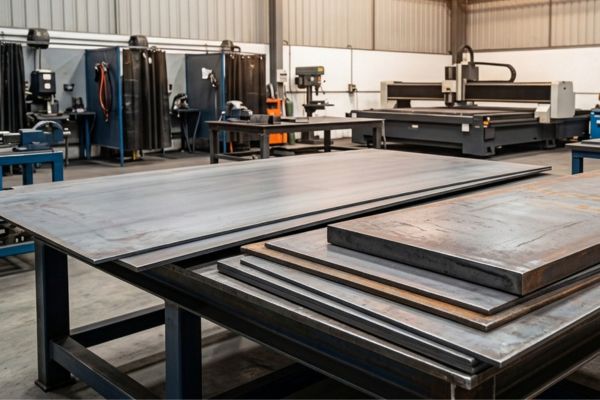
Yes. Warped sheet metal can often be corrected using mechanical straightening or controlled heat straightening, provided the repaired component can still meet its dimensional, material, and performance requirements.
The decision to repair should be based on engineering and economic consideration, not appearance alone.
Mechanical Straightening
Presses, rollers, and other straightening equipment can apply controlled force to distorted areas.
The correction should be gradual. Applying excessive force can overcorrect the component, create new deformation, or affect areas that were previously within tolerance.
Mechanical straightening is easier to control when the distortion pattern is understood, and the workpiece can be adequately supported.
Heat Straightening
Controlled localized heating can also be used to correct certain distortion patterns. Heating selected areas creates controlled expansion and contraction that can move the component toward the required geometry.
This technique requires experience. Excessive temperature or incorrect heating patterns can introduce additional distortion or potentially affect material properties.
For structural or engineered components, heat straightening should follow applicable project specifications and approved procedures.
Choosing the Right MS Plate Supplier to Minimize Warping Risk
Material quality and fabrication techniques should be assessed together. Even a well-planned fabrication procedure becomes harder to control when incoming material varies significantly between orders.
He-Max Industrial Corporation supplies steel plates for construction and fabrication requirements, including MS Plate A36 and MS Plate A572 Grade 50.
For projects that require additional processing, material supply can also be coordinated with appropriate steel fabrication services. Available capabilities include cutting, drilling, shearing, bending, and other steel processing services.
This can be particularly useful for sheet metal fabrication in the Philippines, where contractors may need material delivered at specified dimensions or with fabrication already completed before it reaches the project site.
The right approach depends on the application. Procurement teams should identify the required grades and dimensions, while fabrication teams should determine how the material will be cut, formed, welded, inspected, and assembled.
Coordinating those requirements before purchasing can reduce avoidable production problems later.
For projects that require both steel supply and fabrication support, visit He-Max Industrial Corporation to review available materials and processing capabilities or speak with the sales team about the project’s technical requirements.
Better Material and Process Control Reduce Warping
Sheet metal warping is preventable in many fabrication situations, but there is rarely one universal solution. Weld shrinkage, thermal cutting, residual stress, material condition, cutting sequence, and fixturing can all contribute to distortion.
Fabricators can reduce the risk by controlling heat, planning welding, and cutting sequences, supporting the workpiece correctly, checking material before production, and investigating recurring distortion instead of repeatedly correcting finished components.
Material selection is part of that process. Working with an MS plate supplier in the Philippines that can provide suitable steel grades and fabrication support gives contractors, engineers, and procurement teams a more consistent starting point for production.
Looking for a reliable MS plate supplier in the Philippines? Contact He-Max Industrial Corporation to discuss your fabrication project and determine the appropriate steel material and processing services for your requirements.