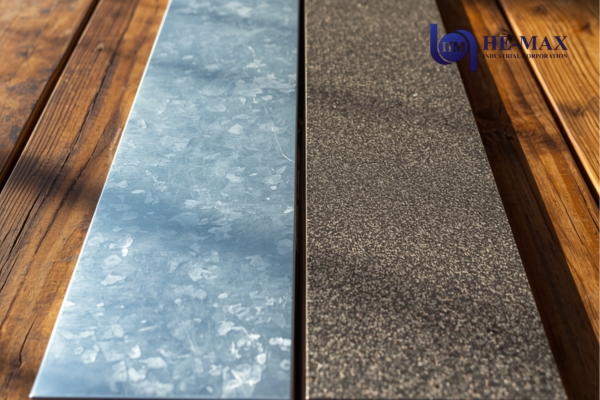
Two suppliers quote galvanized iron (GI) sheets for the same roofing project. Both offer the required dimensions, but one quotation is noticeably cheaper. For a contractor managing a tight construction budget, choosing a lower price might seem like an easy decision.
However, the lowest quotation does not always represent the best value.
In October 2026, the Department of Trade and Industry (DTI), through Task Force KALASAG, inspected 883 stores and found 43 selling uncertified products, according to a Daily Tribune report published October 30, 2026. The seized products were not roofing sheets, but the enforcement activity highlights why buyers should verify product compliance rather than rely solely on supplier claims.
When comparing galvanized sheet prices in the Philippines, buyers should check certification, base-metal thickness, zinc coating, and supporting documentation before deciding which quotation offers better value.
Understanding these details can help contractors, hardware retailers, and procurement teams avoid unexpected material costs, installation problems, and premature replacement.
Is the Cheapest GI Sheet Price Worth It?
The cheapest GI sheet is not necessarily the best value. Prices should only be compared when the sheets have equivalent certification, base-metal thickness, zinc coating, dimensions, and applicable material specifications.
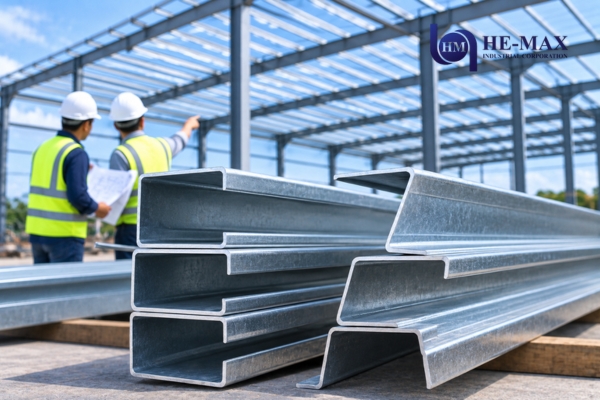
Galvanized steel sheets are coated with zinc to protect the underlying steel against corrosion. However, not all sheets provide the same level of protection or use the same amount of steel.
An unusually low quotation may reflect differences such as:
- Thinner base metal: A lower thickness can reduce material weight and cost but may not meet the project’s structural or installation requirements.
- Lighter zinc coating: Less zinc can mean reduced corrosion protection, particularly in humid, coastal, or industrial environments.
- Missing documentation: A supplier may be unable to demonstrate that the material meets the specified standard.
- Unclear traceability: Without batch information, identifying a defective shipment source becomes more difficult.
These differences matter because roofing costs extend beyond purchasing the sheets.
If the materials deteriorate prematurely or fail to meet the project specifications, contractors may face additional labor, replacement materials, dismantling, and installation expenses.
For example, a warehouse contractor purchasing hundreds of sheets might save on the initial order but incur significantly higher costs if the delivered material is thinner than specified.
The better approach is to compare quotations on a like-for-like basis.
| Comparison factor | What buyers should verify |
| Certification | Applicable certification and supporting documents |
| Base-metal thickness | Specified thickness, excluding coatings where applicable |
| Zinc coating | Coating designation or coating mass |
| Sheet dimensions | Width, length, and profile |
| Material identification | Manufacturer, batch, and traceability details |
| Total delivered cost | Material, processing, transport, and handling |
A lower GI sheet price per sheet can be worthwhile when the material meets the same requirements as a higher-priced alternative. The concern is not a discount itself, but an unexplained difference in specifications or compliance.
How Can I Tell if a Galvanized Roofing Sheet Is Certified?
Check the Philippine Standard (PS) mark where applicable, request supporting supplier documents, and confirm that the delivered sheet’s thickness and coating match the quotation.
DTI’s mandatory product certification framework is intended to help ensure that covered construction materials comply with applicable Philippine National Standards.
For galvanized roofing sheets and coils, buyers should verify the current product coverage and certification requirements with the DTI Bureau of Philippine Standards before purchasing. Certification requirements can depend on the specific product category and its intended use.
Check the PS Mark and Product Documentation
A PS Quality and/or Safety Certification Mark indicates that a product is covered by a valid product certification under the applicable scheme. Buyers should check the certificate details, product coverage, and manufacturer rather than relying on the presence of a printed logo alone.
Request the relevant documentation from the supplier, including the applicable certification and material specifications.
Request a Mill Test Certificate
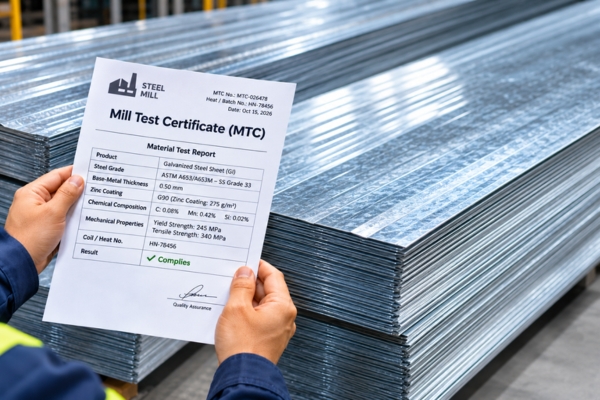
A Mill Test Certificate (MTC), sometimes called a mill test report, records information about the material produced by a steel mill.
Depending on the product and applicable standard, it may contain:
- Steel grade and referenced material standard
- Base-metal thickness
- Zinc coating designation or test results
- Chemical composition and mechanical properties
- Coil, heat, or batch identification
For galvanized steel, standards such as ASTM A653/A653M provide requirements for zinc-coated steel sheet produced through the hot-dip process.
An MTC helps buyers compare delivered materials against the purchase specification. However, it is not a substitute for mandatory Philippine product certification.
Inspect the Sheets Upon Delivery
Before accepting the shipment, examine the following:
- Product markings and labels: Check the manufacturer and relevant identification details.
- Bundle tags: Confirm that the shipment can be matched to supplier documents.
- Thickness and coating: Compare the stated specifications against the approved quotation.
- Surface condition: Look for visible corrosion, dents, coating damage, deformation, or excessive moisture.
A visual inspection cannot independently confirm zinc coating mass or full standards compliance. Where necessary, request appropriate testing or additional documentation.
What Should a Hardware Store Check Before Buying GI Sheets in Bulk?
Hardware stores should verify certification and supplier documentation first, then check specifications, delivery conditions, traceability, and storage requirements.
Bulk purchases introduce additional risks because one inconsistent shipment can affect multiple customer orders.
Five-Point GI Sheet Buying Checklist
- Verify the PS mark and supplier documents. Confirm that applicable certifications are valid and cover the actual products being purchased.
- Compare thickness and coating specifications. Check that the quoted material matches the supplier’s documents, bundle identification, and delivery details.
- Measure sample sheets. Use suitable measuring instruments to check thickness consistency across representative samples. Account for coatings and measurement tolerances when interpreting results.
- Confirm lot or batch identification. Record coil numbers, batch references, and supplier details to support product traceability.
- Inspect delivery conditions and storage arrangements. Keep sheets in a dry, covered, elevated area with appropriate ventilation and protection against trapped moisture.
Proper storage matters because galvanized materials can develop white rust or storage staining when moisture remains trapped between stacked sheets.
Hardware retailers should also retain purchase invoices, delivery receipts, inspection records, and batch information.
If a customer later reports premature corrosion or inconsistent dimensions, these records can help the retailer investigate the issue and coordinate with the supplier.
For stores purchasing GI sheets in the Philippines for resale, consistent documentation can be as important as maintaining competitive prices.
How to Read a GI Sheet Quote
A complete GI sheet quotation should explain exactly what the buyer is purchasing, not simply stating a price.
When evaluating the galvanized iron sheet price in the Philippines, request an itemized quotation showing the material specifications, quantity, processing requirements, and delivery conditions.
Sample GI Sheet Quotation Format
| Quotation field | Information to request |
| Product type | Plain GI sheet, corrugated roofing sheet, or galvanized coil |
| Material standard | Applicable PNS, ASTM, or other specified standard |
| Base-metal thickness | Thickness in millimeters, excluding metallic coating |
| Zinc coating | Coating designation or specified coating mass |
| Dimensions | Width and length in millimeters |
| Quantity | Number of sheets, kilograms, or coils |
| Unit price | Price per sheet, kilogram, or specified length |
| Processing charges | Cutting, shearing, or slitting fees, if applicable |
| Delivery terms | Delivery location, transport charges, and lead time |
| Quotation validity | Date issued and validity period |
One important distinction is between base-metal thickness (BMT) and total coated thickness (TCT). TCT includes the base metal and metallic coating, so the two measurements should not be treated interchangeably.
DTI’s 2021 supplemental guidelines also established specific thickness and marking requirements for covered roofing materials. Buyers should confirm the current requirements before ordering.
The price of galvanized roofing sheet materials can vary depending on thickness, coating, dimensions, order volume, processing, and delivery arrangements.
For accurate budgeting, request quotations based on the same specifications and within a comparable quotation period. Prices should reflect actual project requirements and current supplier quotations rather than outdated price lists.
Get Quality GI Sheets from He-Max Industrial Corporation
A reliable steel supplier should help buyers understand what they are purchasing and provide the documentation needed to evaluate the material.
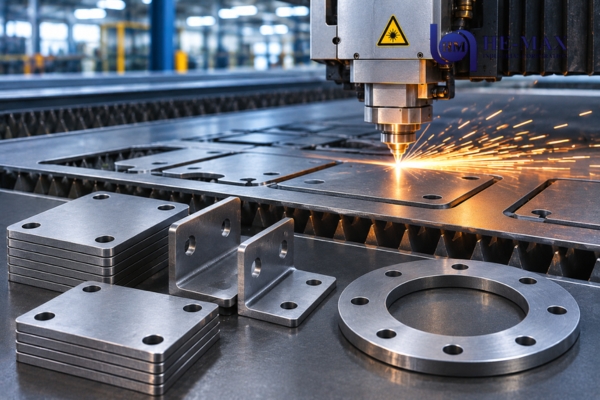
He-Max Industrial Corporation supplies G.I. sheets and coils for construction, fabrication, and industrial applications. Buyers requiring project-specific dimensions can also inquire about shearing services and coil slitting services.
Before placing an order, ask for complete product specifications, applicable certifications, material documentation, and an itemized quotation. This helps establish clear expectations between the supplier and the buyer.
Ultimately, comparing galvanized sheet price in the Philippines requires more than finding the lowest amount. Certification, material quality, traceability, and suitability for the intended application all contribute to the true value of a purchase.
For your next construction or fabrication project, visit He-Max Industrial Corporation or contact the He-Max sales team to request a GI sheet quotation based on your required specifications and quantities.