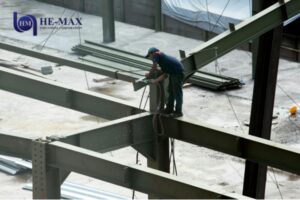
Look up at the skeleton of almost any mall, warehouse, or mid-rise building going up in the Philippines, and you will spot the same shape again and again: a steel member with a tall center plate and two broad, flat plates on top and bottom. That is the wide flange beam, one of the hardest-working structural steel beams in modern construction.
Wide flange beams carry floors, hold up roofs, frame entire buildings, and support heavy equipment. Knowing where and why they are used helps contractors, engineers, and project owners specify the right section, avoid over- or under-designing, and budget accurately. If you are comparing the latest wide flange price in the Philippines, understanding these applications also helps you ask for the right sizes and quantities.
This guide covers what wide flange beams are, why engineers rely on them, six common applications, and how to choose and price them for your project.
What Are Wide Flange Beams?
A wide flange beam (also called a WF beam, H-beam, or W-section) is a hot-rolled steel section shaped like the letter H or I. It has two parts:
- Flanges: the wide, flat plates at the top and bottom. They resist most of the bending stress, with one flange in compression and the other in tension.
- Web: the vertical plate connecting the flanges. It handles shear forces and holds the flanges at a set distance apart.
This arrangement puts most of the steel where it does the most work, far from the center. The American Institute of Steel Construction (AISC) describes the I shape as “a highly optimized shape for construction and use of material”.
Wide Flange vs. Other Structural Sections
| Section | Shape | Key difference |
|---|---|---|
| Wide flange (WF / H-beam) | H or I shape, parallel flanges | Wide flanges of uniform thickness; strong in bending and as columns |
| Traditional I-beam (S-beam) | I shape, tapered flanges | Narrower, sloped flanges; less stable sideways |
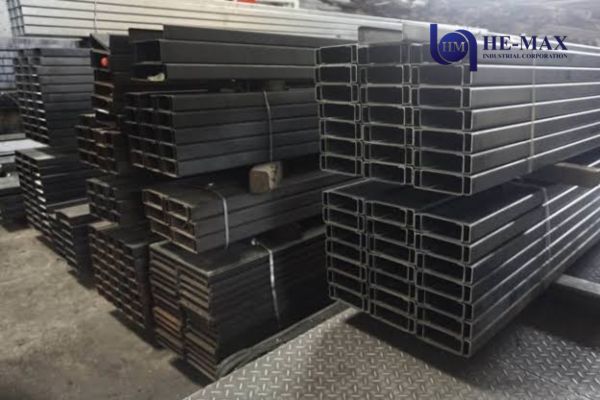
| Channel bar | C shape | Flanges on one side only; used for lighter framing and trims |
| Tee beam | T shape | One flange; used for bracing, trusses, and stiffeners |
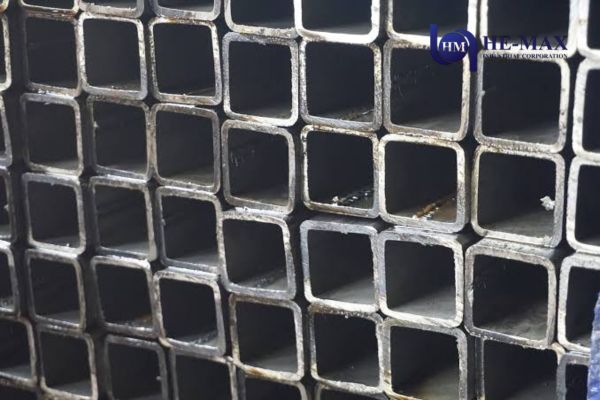
| Hollow sections | Square or rectangular tube | Closed shape; good in torsion and for posts and light columns |
Wide Flange Beam Sizes and Dimensions
In the Philippines, wide flange is commonly specified in metric sizes following the Japanese JIS G 3192 standard. Wide flange beam dimensions are written as depth x flange width x web thickness x flange thickness, in millimeters.
Note: nominal weights can differ slightly between mills and standards, so confirm exact figures with your supplier and engineer.
Why Are Wide Flange Beams Used in Construction?
Wide flange beams are specified because they carry heavy loads efficiently, connect easily, and come in a broad range of standard sizes. Here is what makes them the default choice for so many structural designs.
- High load-bearing capacity: the deep web and wide flanges give a large moment of inertia, so the beam resists bending and deflection under heavy floor, roof, and equipment loads.
- Structural efficiency: more strength per kilo of steel means lighter frames, smaller foundations, and lower material costs than solid or poorly shaped sections.
- Stability: wide, parallel flanges resist sideways (lateral-torsional) buckling better than narrow-flange I-beams, which matters for long spans and tall columns.
- Easy connections: flat, parallel flange surfaces make bolting and welding to plates, columns, and other members simpler on site.
- Versatility: the same section family works as beams, columns, girders, and supports, from a small mezzanine to a multi-storey frame.
- Speed of construction: prefabricated steel members can be cut and drilled off site, then bolted together quickly, often in any weather.
- Sustainability: steel is recyclable. According to AISC, U.S. electric arc furnace mills use at least 93% recycled steel to produce wide flange shapes.
6 Common Applications of Wide Flange Beams in Construction
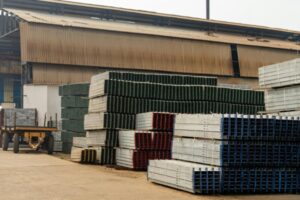
So, what are wide flange beams used for in construction? Here are the six most common applications.
1. Building Columns
As vertical members, wide flange sections carry loads from floors, roofs, and walls down to the foundation. Square-proportioned sizes such as 200 x 200 or 300 x 300 are often chosen because their wide flanges resist buckling in both directions.
Example: a three-storey commercial building in Quezon City might use 250 x 250 or 300 x 300 columns at the ground floor, stepping down to lighter sections on upper floors where loads are smaller.
2. Floor and Roof Beams
Horizontal wide flange beams span between columns and walls to support floor slabs, steel decking, and roofing systems. Deeper, narrower sections such as 300 x 150 or 400 x 200 are efficient here because depth is what gives a beam its bending strength.
3. Building Frames
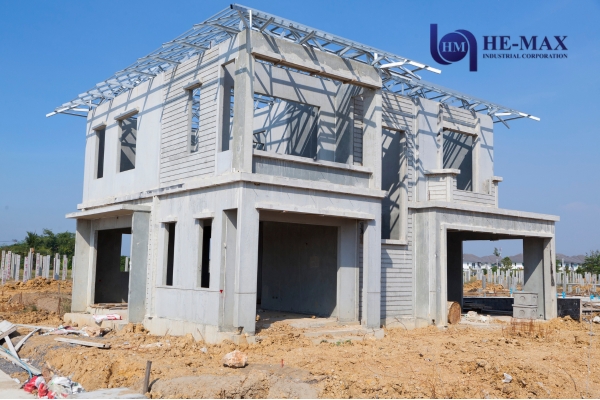
Wide flange columns and beams are joined into complete structural frames for offices, schools, malls, and mid-rise buildings. Bolted or welded moment connections let the frame resist wind and seismic forces, an important consideration in a typhoon- and earthquake-prone country like the Philippines.
4. Bridges and Infrastructure
In short-span bridges, footbridges, flyover supports, and ramps, wide flange girders carry deck, traffic, and pedestrian loads. Heavier sections, or built-up girders made from plates, are used when spans and loads exceed standard rolled sizes.
5. Industrial Facilities and Warehouses
Factories, warehouses, and cold storage plants need wide, column-free floor space. Wide flange columns and rafters make long-span portal frames possible, supporting roofs, wall cladding, and sometimes overhead crane runways. Purlins and girts then span between the main frames.
Example: a logistics warehouse in Bulacan or Laguna typically pairs wide flange portal frames with C and Z purlins and G.I. roofing.
6. Platforms and Supporting Structures
Wide flange beams form mezzanines, catwalks, pipe racks, tank stands, generator and equipment supports, and loading platforms. These are often topped with checkered plate for a slip-resistant walking surface and anchored with fabricated base plates.
Quick reference: application vs. typical section
| Application | Main role | Typical section profile |
|---|---|---|
| Building columns | Vertical load, buckling resistance | Square H (200 x 200 to 400 x 400) |
| Floor and roof beams | Bending over a span | Deep, narrow (250 x 125 to 500 x 200) |
| Building frames | Combined beam-column action | Mix of both, sized by engineer |
| Bridges | Heavy span loads | Large rolled or built-up girders |
| Warehouses | Long-span portal frames | Medium to deep sections |
| Platforms and supports | Equipment and foot traffic | Light to medium sections |
How to Choose Wide Flange Beams for a Construction Project
- Confirm dimensions, grade, and specifications. Note the exact size (for example, 300 x 150 x 6.5 x 9), length, and steel grade, such as JIS SS400, ASTM A36, or higher-strength ASTM A572 Grade 50.
- Base the size on structural and load requirements. Section size depends on span, floor and roof loads, equipment weight, and wind and seismic forces. Never pick a beam size by guesswork.
- Plan fabrication and installation. Decide whether members need cutting to length, holes, end plates, or welded connections, and whether lengths fit delivery trucks and site access.
- Follow the project specifications. Use the sizes and grades in your approved structural drawings, prepared by a licensed civil or structural engineer under the National Structural Code of the Philippines (NSCP).
Pro tip: if a specified size is out of stock, ask your engineer to approve any substitute before ordering. A heavier section is not automatically a safe swap, since it changes connections, weight, and cost.
How Much Do Wide Flange Beams Cost in the Philippines?
Wide flange price in the Philippines varies with size, grade, quantity, and market conditions. Because most wide flange is imported, prices also move with global steel costs, freight rates, and the peso-dollar exchange rate. Treat any fixed price you find online as a rough reference only.
| Price factor | How it affects cost |
|---|---|
| Size and weight per meter | Steel is often priced by weight; a 300 x 300 at 93.0 kg/m costs far more per meter than a 200 x 100 at 20.9 kg/m |
| Length | Standard 6 m, 9 m, or 12 m lengths vs. cut-to-length pieces |
| Grade | Higher-strength grades like A572 Grade 50 usually cost more than A36 or SS400 |
| Quantity | Bulk and project orders typically get better unit pricing |
| Market conditions | Global steel prices, shipping, and exchange rates |
| Fabrication and delivery | Cutting, drilling, welding, and hauling add to the total |
Buyer tip: compare quotes by price per kilogram as well as price per piece. Two “300 x 150” beams can differ in thickness and weight depending on the standard.
For an accurate figure, request a quotation with your exact sizes, grade, lengths, and quantity.
Frequently Asked Questions
What are wide flange beams used for in construction?
Wide flange beams are used as building columns, floor and roof beams, structural frames, bridge girders, warehouse and factory frames, and platforms or equipment supports.
Why are wide flange beams commonly used for structural projects?
They offer high strength for their weight, resist bending and buckling well, connect easily with bolts or welds, and come in many standard sizes that suit beams, columns, and girders.
What is the difference between a wide flange beam and an I-beam?
A wide flange beam has wider, parallel flanges of uniform thickness. A traditional I-beam has narrower, tapered flanges. The wider flanges give WF beams better stability and make connections easier.
What are the common wide flange beam sizes in the Philippines?
Common metric sizes include 150 x 150, 200 x 100, 200 x 200, 250 x 125, 300 x 150, 300 x 300, and 400 x 200 mm. Availability varies by supplier, so check stock before finalizing your design.
How much do wide flange beams cost in the Philippines?
Prices depend on size, weight per meter, grade, length, quantity, and market conditions. Request an updated quotation from your supplier based on your exact specifications.
Source Wide Flange Beams From He-Max Industrial
From columns and floor beams to warehouse frames and equipment platforms, the right wide flange beam keeps your structure safe and your budget on track. He-Max Industrial Corporation imports, wholesales, retails, and fabricates structural steel for construction, fabrication, and industrial projects, with an office in Caloocan City and warehouses in Meycauayan and Marilao, Bulacan.
Before you lock in a wide flange price in the Philippines, get a quote based on your exact sizes, grade, and quantity, plus any fabrication your project needs.
Ready to check availability? Contact He-Max Industrial to inquire about wide flange stock, specifications, and current pricing. Call the trunkline at (632) 8275-3888, text or call 0917-115-8387, or email hemaxsales@gmail.com.