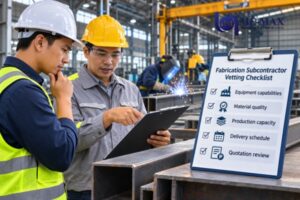
A fabrication subcontractor misses a delivery deadline, leaving the main contractor with idle installation crews, delayed construction activities, and additional project expenses. What initially appeared to be a competitive subcontracting arrangement can quickly become a costly scheduling problem.
Recent actions by the Department of Public Works and Highways (DPWH) against construction firms over project defaults highlight the importance of contractor accountability and reliable project delivery in the Philippines.
For contractors sourcing steel fabrication in the Philippines, choosing the right subcontractor involves more than comparing quotations. Equipment capabilities, material quality, production capacity, and realistic delivery schedules all influence whether a fabrication partner can meet project requirements.
Before submitting a bid for a government or private construction project, contractors should carefully evaluate potential fabrication partners. Understanding how to assess supplier capabilities, identify delay risks, and review fabrication quotations can help prevent costly disruptions and support smoother project execution.
How Do I Choose a Steel Fabricator I Can Trust on a Government Project?
Choose a steel fabricator that can demonstrate suitable equipment, reliable material sourcing, documented quality control, realistic production timelines, and experience with comparable projects.
For government projects, contractors should also confirm that their proposed subcontracting arrangements comply with the applicable bidding documents, procurement requirements, and contract conditions.
Seven-Point Steel Fabricator Vetting Checklist
- Equipment and production capacity. Verify whether the fabricator has suitable cutting, bending, drilling, and welding equipment for the required work. Ask which processes are performed in-house, and which are outsourced.
- Material documentation. Check material sources and request Mill Test Certificates (MTCs) where applicable. These documents help establish material grades, specifications, and traceability.
- Quality control procedures. Ask how the fabricator checks dimensions, weld quality, tolerances, and finished components. Confirm whether inspection reports and supporting records can be provided.
- Production lead times. Review proposed schedules against the quantity, complexity, and processing requirements. A short lead time is only useful if the supplier can realistically meet it.
- Project references. Request examples of completed fabrication work involving similar materials, dimensions, or applications. For structural steelwork fabricators, experience with comparable structural components is particularly relevant.
- Operational stability. Assess whether the subcontractor can sustain production throughout the project. Consider material procurement, equipment availability, workforce requirements, and contingency plans.
- Communication and reporting. Establish who provides progress updates, coordinates drawing revisions, and reports about potential delays.
Inspect Actual Fabrication Work
Completed project photographs provide useful references, but they do not show how a fabricator manages production.
Where practical, arrange a workshop visit to observe ongoing fabrication activities. Check material identification, equipment condition, work organization, and inspection practices.
For projects involving structural steel fabrication, confirm that the supplier understands the specified tolerances, welding requirements, and inspection procedures.
A fabricator’s ability to explain its production process clearly is often more useful than a general promise of fast delivery.
What Happens if a Fabrication Subcontractor Delays a Project?

Fabrication delays can disrupt construction schedules, increase project costs, and affect the main contractor’s contractual commitments.
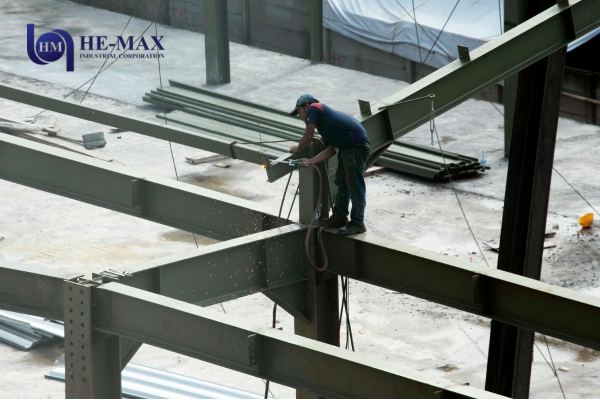
Steel components often need to arrive in a particular sequence. If fabricated beams, plates, brackets, or connection components are unavailable, installation crews may be unable to proceed even when other site activities are ready.
For example, a contractor constructing an industrial warehouse may schedule steel installation immediately after foundation works. If the fabrication subcontractor misses the agreed delivery date, cranes and installation personnel could remain idle while the contractor rearranges subsequent activities.
Potential consequences include:
- Idle labor and equipment: Workers and rented equipment may remain on standby.
- Disrupted installation schedules: Delayed components can affect dependent construction activities.
- Additional project costs: Extended equipment rentals, storage, transport, and remobilization may increase expenses.
- Contractual exposure: Delays may raise concerns about liquidated damages, performance security, or other obligations, depending on the contract.
Warning Signs of Potential Fabrication Delays
Contractors should pay attention when:
- Shop drawings remain unapproved close to the planned production date.
- Material orders have not been confirmed.
- Production schedules lack measurable milestones.
- Progress reports are inconsistent or unavailable.
- Supplier representatives repeatedly fail to respond to requests for updates.
These warning signs do not automatically mean a subcontractor will default, but they justify further investigation.
How Can Contractors Reduce Delay Risks?
Start by confirming material availability before committing to fabrication dates.
Next, establish production milestones covering drawing approval, material procurement, cutting, assembly, inspection, and dispatch.
For larger projects, consider staged deliveries based on the installation sequence. This allows site teams to receive priority components without waiting for the entire fabrication order.
Regular progress monitoring also helps contractors identify potential scheduling problems early enough to adjust their plans.
What Should a Fabrication Quote and Schedule Include?
A complete fabrication quotation should clearly define the scope of work, material specifications, fabrication processes, quality requirements, production milestones, and delivery arrangements.
A quotation that only provides a total amount leaves too much room for misunderstanding. Contractors need enough detail to compare suppliers fairly and determine whether the proposed schedule aligns with the construction program.
Fabrication Quotation Checklist
| Quotation requirement | Details to confirm |
| Project scope | Components covered, exclusions, and drawing references |
| Material specifications | Steel grade, applicable standards, thickness, and material source |
| Fabrication processes | Cutting, bending, drilling, welding, and finishing requirements |
| Quantities and dimensions | Measurements, quantities, and unit pricing |
| Quality control | Inspection procedures, tolerances, and required documents |
| Production schedule | Lead times, milestones, and estimated completion dates |
| Delivery arrangements | Delivery location, schedule, handling, and transport responsibilities |
| Change-order procedures | How revisions affect pricing and production schedules |
| Quotation validity | Expiration date, payment terms, and pricing conditions |
Clarify Drawing Responsibilities Before Production
One common source of fabrication delays is uncertainty over shop drawing responsibilities.
Before awarding the work, establish who prepares the shop drawings, who reviews and approves them, and when fabrication can begin.
For instance, a steel fabrication contractor may prepare cutting details based on engineering drawings. If the main contractor later requests dimensional changes, the fabricator may need to revise the drawings, adjust material requirements, and reschedule production.
Document how these revisions affect costs and delivery dates.
Contractors evaluating steel fabricators in the Philippines should also distinguish between estimated lead times and confirmed production commitments. A realistic schedule should account for drawing approval, material procurement, fabrication, inspection, and delivery.
Why Material Supply and Fabrication Under One Roof Reduces Risk
Working with one supplier for steel materials and fabrication services can reduce coordination problems by limiting unnecessary handoffs between material sourcing and processing.
In a conventional arrangement, a contractor might purchase steel from one company, arrange transport to a separate fabrication workshop, and coordinate with another provider for specialized cutting or bending.
Each transfer introduces additional scheduling and communication requirements.
When material sourcing and processing are coordinated through one supplier, contractors may find it easier to align material specifications, production requirements, and delivery arrangements.
This can be especially useful for projects requiring custom-sized steel components.
Coordinate Steel Supply and Processing Requirements
Different fabrication processes serve different purposes:
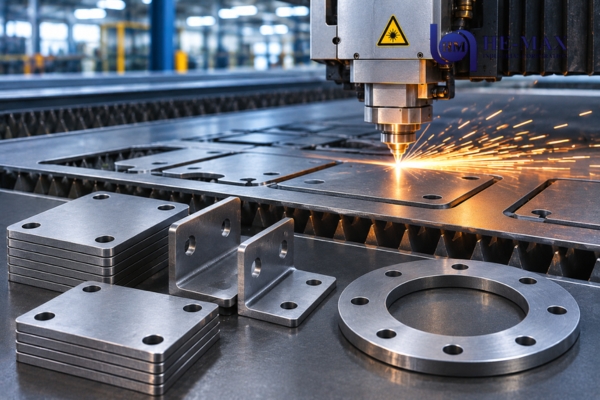
- Fiber laser cutting: Uses computer-controlled cutting equipment to produce components according to specified dimensions and shapes.
- Shearing and bending: Prepares steel plates and sheets through straight cutting and controlled forming.
- Coil slitting: Processes wider steel coils into narrower widths for downstream manufacturing or fabrication.
Selecting the appropriate process depends on material grade, thickness, component geometry, dimensional tolerances, and intended application.
Contractors should confirm the supplier’s equipment limitations and processing capabilities before finalizing their requirements.
Get Steel Supply and Fabrication Support from He-Max Industrial
For contractors looking for material supply and metal fabrication in the Philippines, He-Max Industrial Corporation offers steel products and processing services for construction and industrial applications.
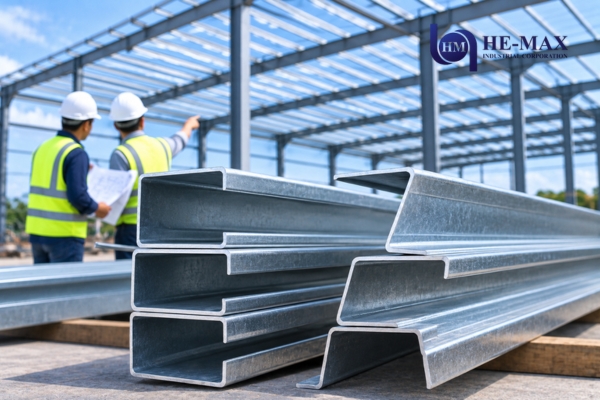
Its available product categories include steel plates, structural sections, and bars, which contractors can evaluate according to their project specifications.
He-Max also provides several fabrication-related services:
- Fiber laser cutting for custom-cut steel components.
- Shearing and bending services preparing steel plates and sheets to specified dimensions.
- Coil slitting services for producing narrower steel strips from coils.
These services can help contractors coordinate material preparation with their fabrication requirements, subject to project specifications and service availability.
Before bidding, share your material requirements, drawings, quantities, and target delivery dates with the supplier. This allows both parties to clarify the scope of work and identify any processing or scheduling considerations.
Choosing the right partner for steel fabrication in the Philippines requires careful evaluation of technical capabilities, documentation, communication, and realistic timelines.
Visit He-Max Industrial Corporation or contact the He-Max sales team to discuss your steel supply and fabrication requirements and request a quotation for your upcoming project.