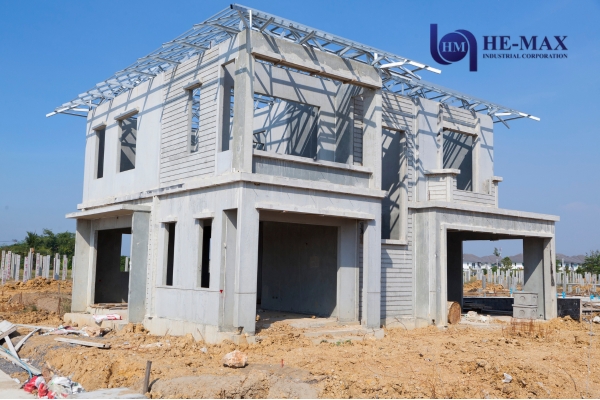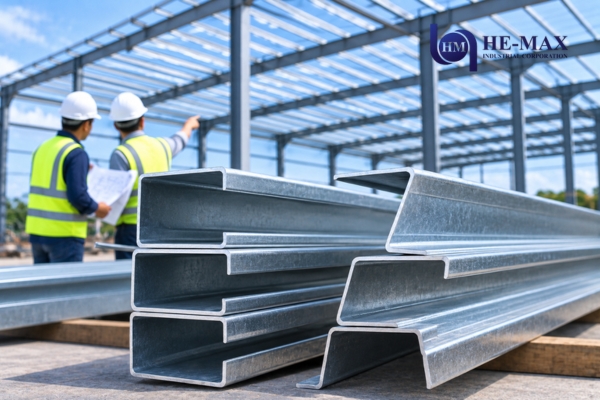
Prefabricated steel construction is gaining attention in the Philippines as developers and contractors look for ways to shorten construction timelines. By preparing structural components before they reach the site, project teams can reduce certain on-site activities and improve installation coordination.
A Research and Markets report distributed through GlobeNewswire in October 2026 estimated the Philippine prefabricated construction market at US$16.04 billion in 2026, with projections reaching US$27.11 billion by 2031, representing an annual growth rate of 11.07%. The report also discussed the potential to reduce some construction timelines from 18 months to nine months.
However, faster construction depends on having correctly specified materials ready when installation begins. A shipment of purlins with incorrect dimensions or lengths can delay roofing installation, even when the main steel frames are already assembled.
For contractors choosing a C Purlins supplier, understanding purlin profiles, thicknesses, material finishes, and delivery requirements is essential.
This guide explains how to select C and Z purlins for prefabricated warehouses, what to check when comparing available sizes, and how to coordinate material procurement with construction schedules.
Why Are More Philippine Projects Using Prefabricated Steel?
Prefabricated construction can shorten project schedules by preparing building components before on-site assembly. It can also improve production consistency and support demand for faster, more resilient building solutions.
In conventional construction, many activities depend on the completion of earlier site work. Prefabrication allows certain components to be manufactured or prepared while foundation and other construction activities continue.
For steel warehouse projects, this approach can offer several advantages:
- Shorter on-site construction periods: Pre-cut and prepared components can reduce fabrication work at the project location.
- Improved dimensional consistency: Controlled fabrication processes can help maintain specified measurements and tolerances.
- More predictable installation: Components prepared according to approved drawings can support organized assembly sequences.
- Reduced site congestion: Less on-site cutting and material preparation can simplify construction.
The Research and Markets report also identifies housing demand and the need for resilient construction as factors supporting prefabricated building adoption in the Philippines.
But prefabrication does not eliminate construction delays. Its benefits depend on accurate engineering, material availability, and coordination among suppliers, fabricators, and installation teams.
This is particularly important for warehouse roofing systems, where purlins must match the structural layout before roof panels can be installed.
What Purlin Sizes Are Used in Prefab Warehouses?
Purlin sizes depend on structural span, frame spacing, roofing loads, wind exposure, and the overall building design. The project’s structural engineer should determine the appropriate profile, dimensions, thickness, and spacing.
Purlins are secondary structural members that support roof coverings and transfer loads to the primary steel framing system. Similar cold-formed members may also serve as wall girts, supporting exterior wall cladding.
Understanding C and Z Purlins
C Purlins
C-shaped sections are commonly used for roof and wall framing, particularly where simple connections and individual spans are required.
Z Purlins
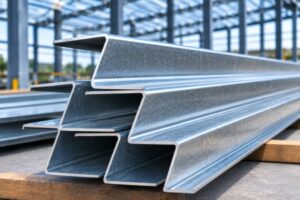
Z-shaped sections can be arranged with overlapping connections over supports where the structural design permits continuous framing.
Both profiles are used in prefabricated steel buildings, but they are not automatically interchangeable.
The choice depends on the engineer’s design, connection details, loading requirements, and installation.
What Factors Determine the Correct Purlin Size?
When evaluating purlin sizes in the Philippines, contractors should consider:
- Structural span: Longer unsupported spans may require deeper or stronger sections.
- Frame spacing: The distance between primary frames affects the loads carried by each purlin.
- Roofing material: Different roofing systems impose different dead loads and connection requirements.
- Wind exposure: Roof uplift and other wind forces are especially important in typhoon-prone locations.
- Material thickness: Thickness affects strength, stiffness, weight, and connection performance.
For example, two warehouses may have similar floor areas but require different purlin specifications because their frame spacing, roof geometry, and wind exposure differ.
How to Compare Purlin Dimensions
Suppliers typically identify cold-formed purlins using their section dimensions and material thickness.
| Specification | What it means |
| Profile | C-shaped or Z-shaped section |
| Web depth | Overall depth of the main vertical section |
| Flange width | Width of the horizontal portions |
| Lip dimension | Size of the stiffening edge, where applicable |
| Material thickness | Specified base-metal thickness |
| Length | Required member length based on approved drawings |
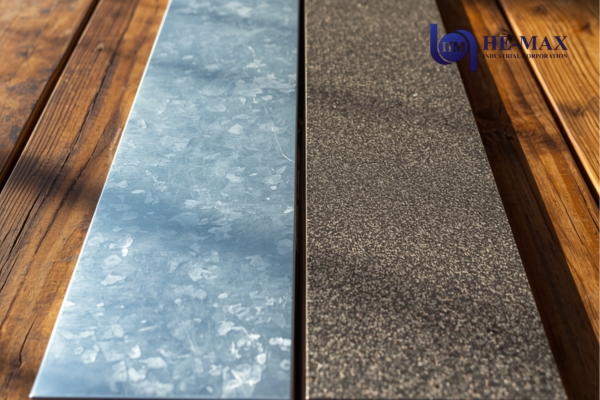
| Material finish | Black iron (B.I.) or galvanized iron (G.I.), where offered |
Buyers comparing C Purlins in the Philippines should request the supplier’s actual dimension and thickness schedule rather than assume that nominally similar sections have identical properties.
For steel purlins in the Philippines, the engineer must also consider the applicable structural design standards, including the National Structural Code of the Philippines.
Available product dimensions are not automatically suitable for every warehouse project.
Available C and Z Purlin Sizes from He-Max
He-Max offers B.I. and G.I. C and Z purlins in the following commercial dimensions and thicknesses.
| Listed size | Thickness range | Standard length |
| 2″ × 3″ | 0.6–2.0 mm | 6 m |
| 2″ × 4″ | 0.6–2.0 mm | 6 m |
| 2″ × 6″ | 0.6–2.0 mm | 6 m |
| 2″ × 7″ | 0.6–2.0 mm | 6 m |
The product page also indicates that other sizes can be custom-made. Buyers should confirm the profile orientation, flange and web dimensions, actual thickness availability, and production requirements before ordering.
Can Purlins Be Cut to Length Before Delivery?
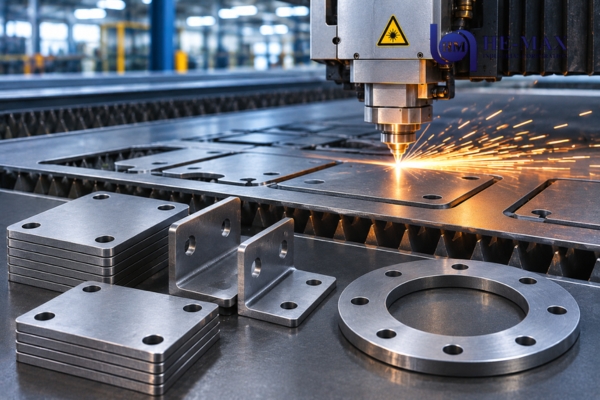
Yes, purlins can be prepared in project-specific lengths when the supplier offers suitable cutting or fabrication services. But custom sizing and cutting arrangements should be confirmed before placing an order.
Pre-cut purlins can simplify installation because components arrive closer to their required dimensions.
For a prefabricated warehouse, this can help reduce on-site measuring and cutting, minimize offcuts, and support installation according to the approved framing layout.
What Should Buyers Provide When Requesting Custom Purlins?
When requesting a quotation, prepare the following information:
- Purlin profile and dimensions: Specify whether C or Z sections are required, including web depth, flange width, and lip dimensions.
- Material and thickness: Identify whether the project requires B.I. or G.I. material and the specified base-metal thickness.
- Required lengths and quantities: Provide a cutting list based on approved drawings.
- Hole and notch requirements: Include connection details where drilling or notching is necessary.
- Delivery sequence: Identify which components are required for each warehouse bay or construction phase.
He-Max lists custom sizing for its C and Z purlins and describes bending and roll-forming capabilities on its steel processing services page. Buyers should confirm whether their specific cut-to-length, drilling, or notching requirements can be accommodated.
Before ordering, verify final measurements against approved drawings. Changes to frame spacing, connection details, or roof layout can affect the required lengths.
How to Avoid Purlin Procurement Gaps
The best way to prevent purlin procurement delays is to finalize specifications early, verify supplier availability, and coordinate deliveries with the construction schedule.
The October 2026 Research and Markets report identified potential steel procurement delays of 8–12 weeks associated with imported material dependencies and supply-chain disruptions. This is a market-level estimate, not a standard delivery period for every supplier or purlin order.
For prefabricated warehouses, delays can affect more than material arrival. If purlins are unavailable after the main frames are erected, roofing installation may need to be rescheduled, potentially affecting subsequent construction activities.
Purlin Procurement Checklist
- Finalize specifications early. Confirm profile, thickness, dimensions, coating requirements, and quantities with the structural engineer.
- Check material availability. Ask the supplier whether the required products are in stock or need fabrication.
- Coordinate phased deliveries. Match delivery schedules with the warehouse’s planned installation sequence.
- Allow scheduling buffers. Account for drawing revisions, material substitutions requiring approval, and processing requirements.
- Confirm the order details. Review quantities, delivery location, unloading arrangements, and shipment documentation.
For galvanized purlins in the Philippines, contractors should also confirm the specified coating requirements and check how materials will be protected during transport and storage.
A full procurement plan helps prevent material discrepancies from becoming larger installation problems.
Source C and Z Purlins from He-Max Industrial Corporation
Choosing the right C Purlins supplier means finding a company that can provide suitable materials, clear specifications, and processing support aligned with project requirements.
He-Max Industrial Corporation supplies B.I. and G.I. C and Z purlins for roofing, wall framing, and structural support applications.
Its published commercial range includes 2″ × 3″, 2″ × 4″, 2″ × 6″, and 2″ × 7″ sections, with listed thicknesses of 0.6–2.0 mm and standard lengths of 6 meters. Custom sizes may also be requested, subject to confirmation.
Contractors can discuss their drawings, required quantities, material finishes, and sizing requirements with the He-Max team before requesting a quotation.
For prefabricated warehouses, selecting appropriate C and Z purlins is only one part of successful procurement. Accurate specifications, coordinated material preparation, and realistic delivery planning are equally important.
Visit He-Max Industrial Corporation or contact the He-Max sales team to inquire about available purlin sizes, custom requirements, and quotations for your upcoming warehouse project.