In the rapidly evolving skyline of Metro Manila and the expanding industrial hubs of Cebu and Davao, structural integrity is the silent backbone of progress. When engineers design expansive warehouses or mid-rise commercial complexes, they often encounter a logistical hurdle: steel beams don’t come in infinite lengths. This is where H-beam splicing becomes critical.
Splicing is the process of joining two or more steel sections to create a single continuous member. Whether you are extending a span or overcoming transport limitations, the quality of your beam splice connection determines the safety and longevity of the entire structure. For any developer or contractor working with a top H-beam supplier in the Philippines, understanding the nuances of splicing is not just a technical requirement—it’s a safety mandate.
How do you splice H-beams on a construction site in the Philippines?
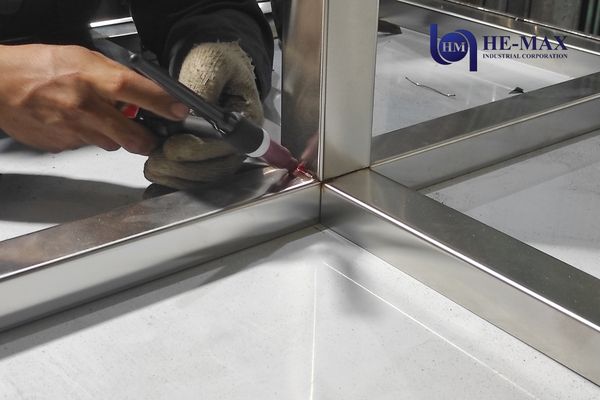
On a typical Philippine job site, splicing is executed through either bolting, welding, or a combination of both. The process begins with rigorous alignment using jigs or temporary support to ensure the two sections are perfectly flush. Depending on the structural requirements—often dictated by the National Structural Code of the Philippines (NSCP)—workers will then install cover plates for a bolted beam splice or perform high-precision arc welding for a seamless finish.
When to Use H-Beam Splicing
In an ideal world, every beam would be a single, continuous piece of steel. However, practical engineering often demands a different approach.
- Span Length Exceeds Available Stock
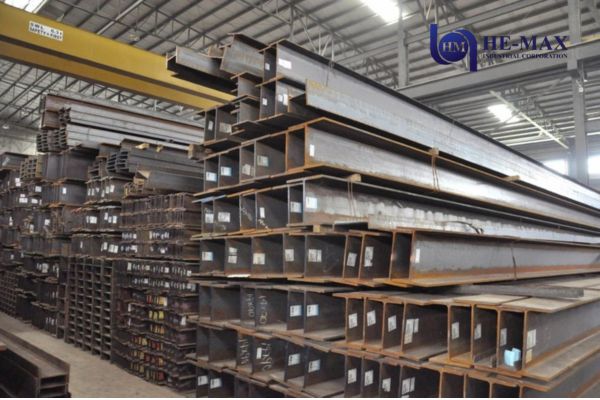
Standard H-beams are typically manufactured in lengths of 6, 9, or 12 meters. If your design requires a 20-meter clear span for an industrial hangar, you cannot simply order a single piece of that length without incurring massive logistics costs. Before ordering, it is helpful to consult a Standard Lengths and Sizes Cheat Sheet to see which sections can be delivered without splicing.
- Site Access and Transport Limitations
Navigating the narrow streets of Manila or transporting materials to remote provincial sites poses a challenge. Long beams are difficult to maneuver and require specialized trailers. By using a splice connection steel beam strategy, components can be transported in manageable sections and assembled on-site.
- Load Distribution Requirements
Sometimes, a splice is about efficiency. Engineers may splice different weights of H-beams together—using a heavier section where the bending moment is highest and a lighter section where the load tapers off. Understanding the difference in these sections is key, which is why we recommend reviewing our Comprehensive Guide to H-Beams to ensure you are splicing the correct profiles.
- Staged or Phased Construction Projects
For multi-phase developments, H-beams may be left with splice preparations to allow for future vertical or horizontal expansion.
- Repair and Reinforcement
In cases where an existing structure has suffered from corrosion—a common issue in our tropical climate—splicing in a new section is often the best fix. For more on this, see our guide on Structural Steel Maintenance in Tropical Climates.
When should you join steel beams instead of using a single continuous beam?
You should opt for joining beams when the logistical cost of transporting over-length sections outweighs the labor cost of splicing, or when site constraints (like crane capacity) prevent the installation of a single continuous member.
Types of H-Beam Splicing Techniques
Choosing the right beam splice detail is a balance between structural necessity, budget, and on-site labor skill.
- Bolted Splice Connections
Bolting is highly favored in the Philippines because it is faster to execute and easier to inspect than welding.
- End Plate Splicing: Plates are welded to the ends of the H-beams and then bolted together face-to-face.
- Cover Plate Splicing: Also known as “fish plates,” these involve placing steel plates over the flanges and webs and bolting through them.
- Welded Splice Connections
- Full Penetration Butt Weld: The beam ends are beveled, and the gap is filled entirely with weld metal. This creates a joint as strong as the base metal.
- Partial Penetration Weld: Used for secondary members where full load-bearing capacity isn’t required.
- Moment Splices vs. Shear Splices
A Shear Splice handles vertical loads, while a Moment Splice is designed to resist rotation and bending.
What is the strongest way to connect H-beams?
The Full Penetration Butt Weld is the strongest because it merges the two pieces molecularly. However, a properly engineered bolted beam splice with high-strength bolts is equally reliable and much easier to quality-control in field conditions.
Ensure Quality from the Source — He-Max Industrial
A perfect splice starts with the base material. At He-Max Industrial, we provide high-grade structural steel that meets ASTM A36 or A572 standards. Whether you need wide-flange beams for an industrial plant or standard H-beams for a warehouse, we ensure every section is dimensionally accurate.
As a leading H beam supplier in the Philippines, we don’t just provide steel; we provide the foundation for your project’s success. Our materials are designed to be easily integrated into any splice connection steel beam design, ensuring your site work is as efficient as possible.
Why Choose He-Max?
- Precision Cutting: We offer custom lengths to minimize the number of splices needed.
- Technical Support: We help you understand the specs for various connection types.
- Reliable Delivery: From Luzon to Mindanao, we ensure your steel arrives on time.
For more information on our product range, including H-beams, I-beams, and C-channels, visit our official product page.
Ready to start your next project? Contact He-Max Industrial for a quote on high-quality H-beams or to consult with our experts on your project requirements.